
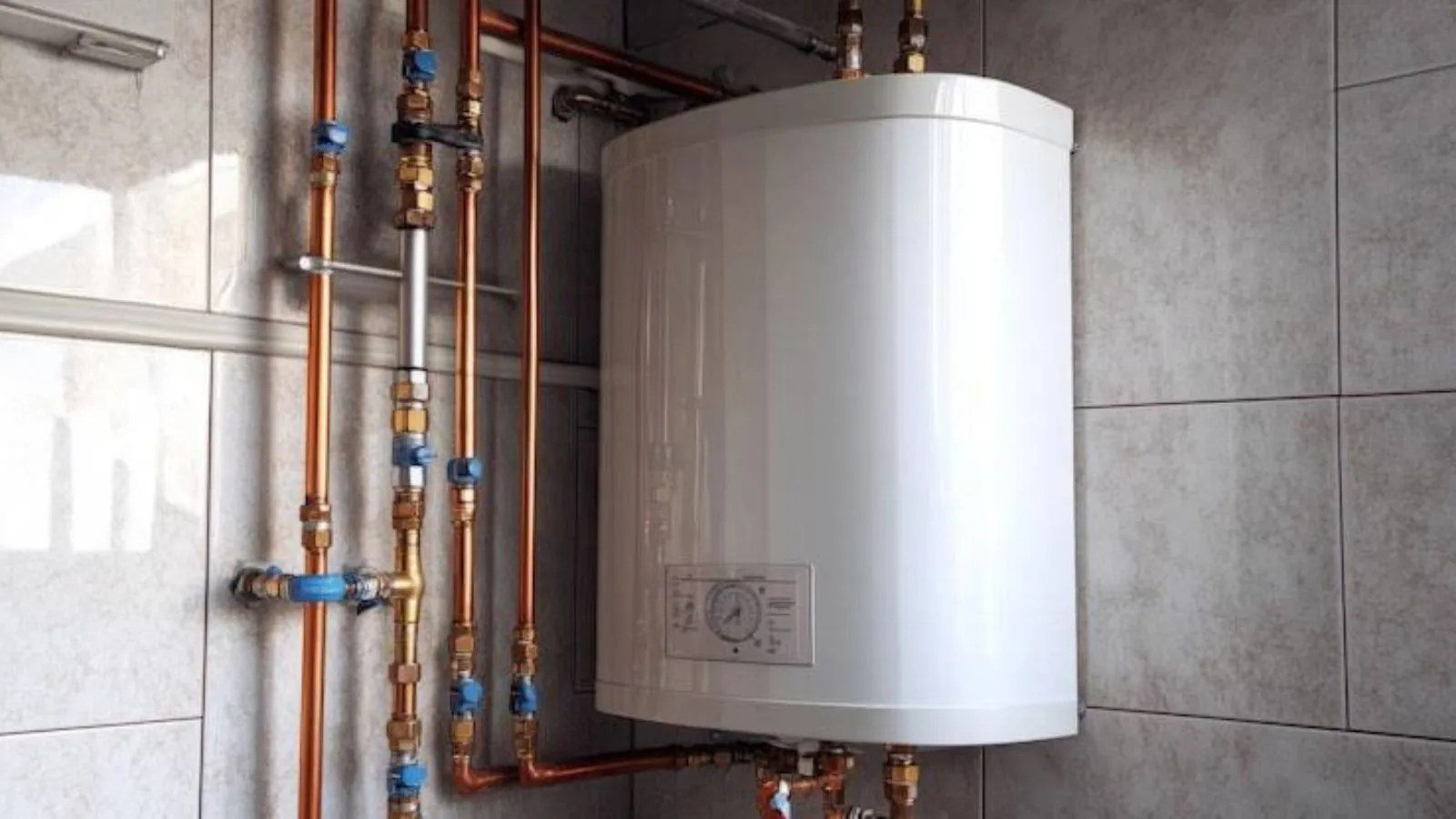
Water heaters fail in two ways. Slow leaks from a corroded tank or a loose fitting stain the floor around the base, and sudden failures dump the whole tank at once. Either way, the water ends up in flooring, drywall and whatever was stored nearby.
We handle the water side: extraction, drying, removal of wet materials and repair. Your plumber replaces or repairs the heater, and we work around that schedule.
First steps when the heater is leaking
Safety checklist for a leaking water heater
Turn off power to an electric heater at the breaker, or set a gas heater to pilot or off. Then close the cold water supply valve on top of the tank.
Do not touch the unit if water is deep around it and the power is still on. Hot water and electricity are a dangerous mix, so leave it alone and call.
If the tank is leaking from the top or the pressure valve, the water may be hot enough to burn. Keep children and pets away and wait for the water to cool before stepping close.
Where Johns Island water heaters sit
Many homes put the heater in a garage, a utility closet or an attic space. Garage units leak onto concrete, which carries the water to the nearest wall. Attic units leak through the ceiling below, which makes this page closely related to ceiling water damage repair.
A drain pan with a line to the exterior catches small leaks, but not a tank that gives way. If you do not know where your pan drains, find out before the next leak.
Signs your heater is leaking
Rusty water or sediment
Rust at the base of the tank or rust-colored water from the tap points to internal corrosion.
Puddles at the base
Even a small, steady puddle means the tank is failing.
Dripping valve
A relief valve that drips can be a safety issue as well as a leak.
Damp drywall nearby
A wet wall behind a heater closet may have been leaking for weeks.
Rumbling noises
Sediment buildup heats unevenly and stresses the tank.
Moisture meter spikes
A meter reading beside the tank can find leaks you cannot see.
Our cleanup process
Extract the water
We pump and extract water from the garage, closet or floor.
Remove wet materials
Wet drywall, insulation and baseboards are removed where needed.
Dry the area
Air movers and dehumidifiers dry the structure and adjacent rooms.
Repair and restore
We replace removed materials after drying is verified.
Hot water leaks and drying
Hot water spreads heat as well as moisture, which can raise humidity in a closed space. In Lowcountry summers that adds to an already damp house, so drying with dehumidifiers matters more than just wiping the floor.
If the leak ran for days before anyone noticed, cabinets, shelves and stored boxes may have mold risk. See mold remediation if you see growth.
What affects the scope
Where the heater is
Attic and second-floor units cause more damage than a garage unit.
Time of leak
A tank that dumped all at once is different from a slow seep.
Floor type
Concrete is simple to clean. Wood and laminate need more care.
Stored items
Boxes and fabric near the heater often need to be discarded.
Water heater leaks and claims
Insurers often cover sudden tank failures but not a heater that is simply worn out. Save the old tank for inspection if your adjuster requests it, and photograph the label and the leak.
Related cleanup
A heater in a kitchen or laundry area may also trigger appliance leak cleanup, and heavy flooding in a garage connects to water extraction.
Questions from Johns Island homeowners
Yes. Our line is open 24/7, including nights, weekends and holidays, and the call is the first step for a leaking water heater.
Tell the dispatcher where the water is coming from, what is wet and whether the source is shut off. Same-day response is offered when available, and the scope and price are explained before work starts.
Not until a plumber checks the unit. A leaking tank can fail completely, and water, power and gas all need to be handled safely.
Residential tanks commonly hold 40 to 80 gallons, so a full failure can flood a room quickly.
No. A plumber handles the heater, and we handle water removal, drying and repair around it.
Closing the cold supply to the heater is the first step. If you cannot reach it or the leak is large, shut the main.
A pan with a drain line catches small leaks but not a full tank failure. Check that the drain line leads somewhere useful.