
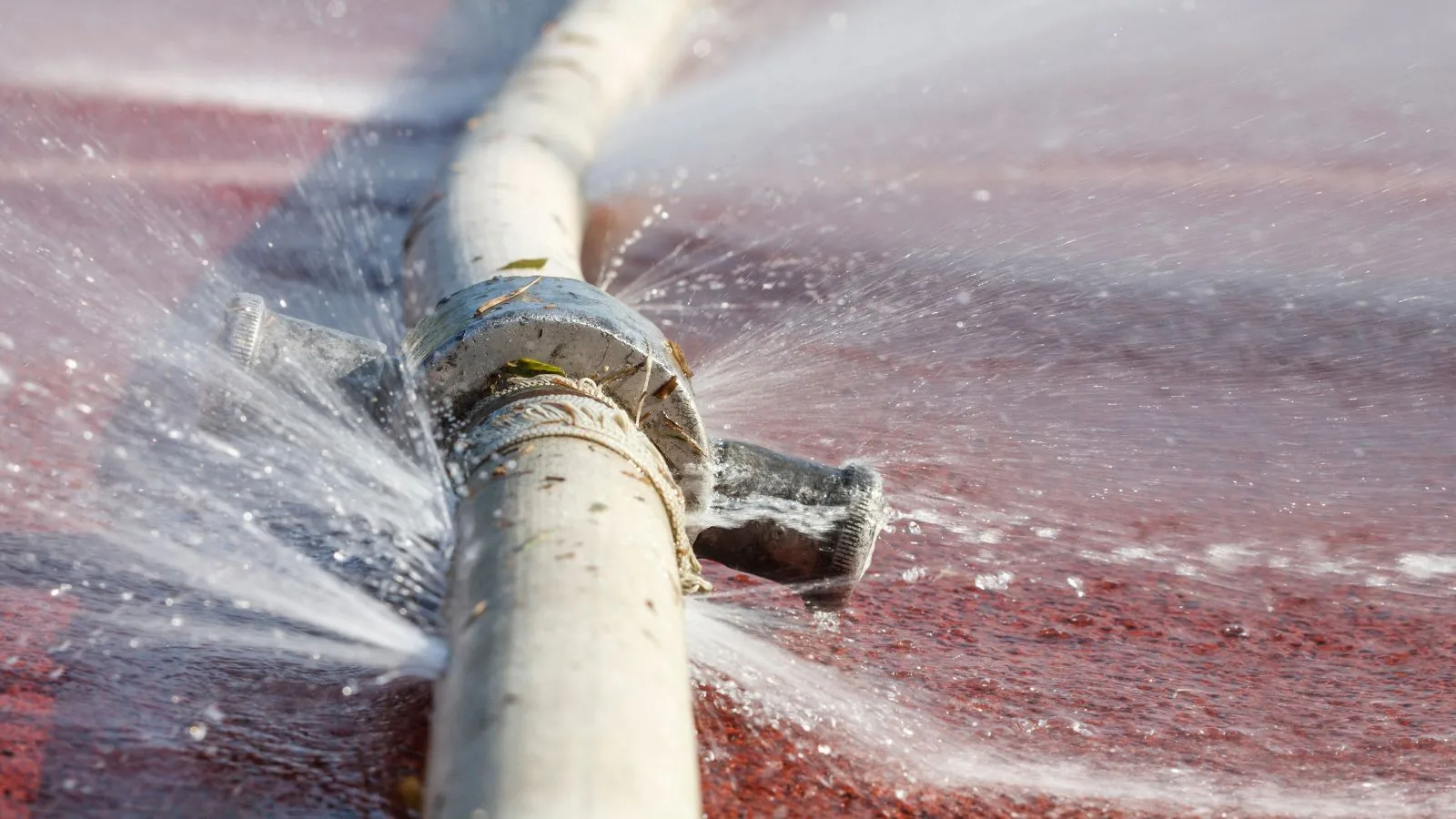
A burst pipe sends clean water into walls, ceilings and floors under pressure, and it keeps going until someone closes a valve. By the time you notice a stain or a sound, the water may already have moved through a wall cavity into the next room. This page covers the cleanup after the break. The plumbing repair itself is a plumber's job.
We extract the water, open the affected walls or ceilings, dry the structure and repair what had to be removed. We work alongside your plumber, and we document the source so the claim has a clear cause.
Stop the water first
Shut-off and safety checklist
Find your main shutoff, usually near the meter, where the line enters the house or at an outside spigot box. Turn it clockwise until it stops, then open a faucet at the lowest point to drain the lines.
Turn off the water heater, and leave electrical panels alone if the water has reached them. If water is falling through light fixtures, keep the lights off and stay clear.
Photograph the break, the wet areas and any damaged belongings. Then call us so extraction can begin while the plumber is on the way.
Check your water bill to see whether Charleston Water System or St. John's Water Company serves your address. Both can confirm a main line issue if the shutoff will not close.
Where pipes tend to fail in Lowcountry homes
Supply line fittings
Fittings and push-connect joints can loosen with age and pressure, and they often fail behind a vanity or inside a wall.
Old copper and galvanized runs
Corrosion thins pipe walls until a pinhole leak becomes a split.
Attic and crawl space lines
Pipes outside the conditioned space sweat, corrode and, in a hard freeze, can crack.
Appliance connections
Braided hoses at washers, dishwashers and ice makers burst at the coupling.
Slab penetrations
Lines that run under or through the slab can leak without any visible water at first.
Outdoor hose bibs
A cracked spigot can leak inside the wall behind it.
What the cleanup looks like
Extract the water
Pumps and extractors remove standing water from floors and low spots.
Open the wet areas
We cut baseboards, drywall or ceiling sections where moisture is trapped.
Dry the structure
Air movers and dehumidifiers run while meters track progress.
Rebuild what was opened
Drywall, trim, flooring and paint are repaired after readings confirm the area is dry.
Clean water still becomes a problem
Water from a supply line starts as clean, but it picks up dust and organic matter as it spreads. After roughly two days it is treated as a higher category, and mold can begin on damp drywall and wood. That is why speed on a burst pipe matters more than the neatness of the cleanup.
If your pipe burst because of a hard freeze, see our page on frozen pipe damage for how thaw timing changes the job.
Factors that affect the size of a burst pipe job
How long it ran
A leak that ran for hours reaches more rooms than one stopped in minutes.
Where it was
Water in a wall cavity is harder to dry than water on a bare floor.
Floor type
Tile dries easier than hardwood or carpet.
Hidden damage
Water that tracked into insulation or a subfloor adds demolition and drying time.
| Where the pipe broke | Likely damage | Common response |
|---|---|---|
| Upstairs bathroom | Ceiling below, wall cavity | Open ceiling, dry, patch |
| Kitchen sink line | Cabinet base, floor | Pull toe kicks, dry subfloor |
| Attic | Insulation, ceilings | Remove wet insulation, dry |
| Under slab | Floor coverings | Locate with a plumber, dry |
Burst pipes and homeowners claims
Sudden pipe bursts are usually covered, but long-term slow leaks often are not. Shut off the water, keep receipts for emergency work and tell your insurer promptly.
Ask your adjuster whether the plumbing repair itself is covered separately from the water damage that followed it.
Related work after a burst pipe
If the break flooded a kitchen, see kitchen water damage restoration. When water reached the downstairs ceiling, ceiling repair covers that step. For a pipe under the slab, slab leak cleanup explains what makes that case different.
Questions from Johns Island homeowners
Yes. Our line is open 24/7, including nights, weekends and holidays, and the call is the first step for a burst pipe.
Tell the dispatcher where the water is coming from, what is wet and whether the source is shut off. Same-day response is offered when available, and the scope and price are explained before work starts.
That depends on your policy. The plumber fixes the pipe, and your insurer decides how the pipe repair and resulting water damage are covered. Ask your agent before work begins if you can.
Right away. Shut off the water, call for extraction and begin drying within the first day when possible. Delays let water reach more materials.
Sometimes. Clean-water drywall that is caught early can often be dried in place. Drywall that sat wet for days or is saturated usually has to be replaced.
Yes. We handle water removal, drying and repairs to walls and ceilings. A plumber repairs or replaces the pipe itself.
Hard freezes are uncommon, but they do happen. Charleston-area climate normals show a handful of nights each winter at or below 32 degrees, which is enough to crack exposed pipes.