
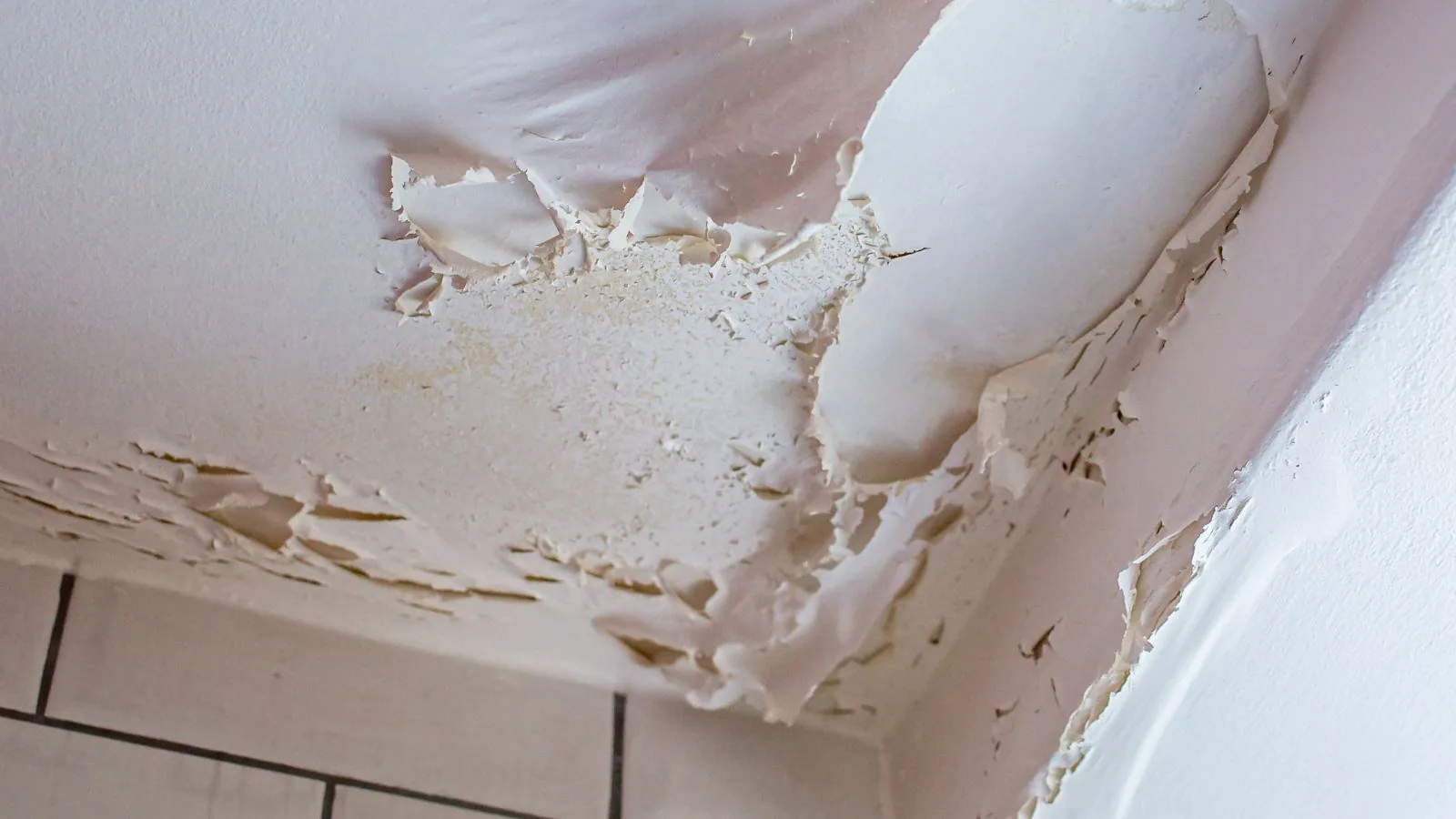
Ceiling water damage almost always starts somewhere you cannot see. A roof leak, a failed plumbing joint in the attic or a bathroom supply line saturates insulation and drywall until it shows as a stain or a bulge. This page covers both ceiling repair and the roof leak damage that causes it.
We find the wet area, relieve trapped water safely, remove what cannot dry and repair the ceiling after moisture readings are normal. The roof or plumbing itself is the source, so we point you to the right trade while we handle the water damage side.
If water is coming through the ceiling right now
Safety steps for a wet ceiling
Stay out from under a sagging or bulging ceiling. Wet drywall can collapse without warning, and water above light fixtures is an electrical hazard, so leave those lights off.
If water is dripping, put a bucket below it and poke one small hole in the lowest point of a bulge to let water out in a controlled way. Do not stand directly under it while you do.
Move furniture and electronics out of the drip zone and take photos of the stain. If it is raining, call a roofer for the leak itself and call us for the water damage inside.
How Lowcountry weather puts water above your head
The Lowcountry gets long summer storm seasons, and the Atlantic hurricane season runs from June 1 through November 30. Wind-driven rain finds flashing, vents, skylights and lifted shingles that stay dry in ordinary weather.
The National Weather Service newsletter for Charleston also records a tornado on Johns Island in 2015, a reminder that strong storms can reach roofs on the island with little warning.
What a leaking ceiling looks like
Brown rings
Rings that grow after each rain point to a slow leak that wets the ceiling repeatedly.
Bubbled or peeling paint
Water trapped under paint lifts it before the drywall fails.
A sagging patch
Drywall that sags is holding water and can come down.
Drips near fixtures
Water tracking along a wire or fan housing is a safety concern as well as a leak.
Musty attic smell
Wet insulation up top holds moisture against framing and decking.
Stains that return
A stain that comes back after painting means the source is still active.
Our ceiling repair process
Locate the water
We use a moisture meter and thermal camera to map the wet area beyond the visible stain.
Open and relieve
We cut access where water is trapped and remove wet insulation.
Dry the cavity
Air movers and dehumidifiers dry the framing and the room.
Repair and finish
Once dry, we patch or replace drywall and prepare it for paint.
Roof leak or plumbing leak?
A leak that appears only in rain usually comes from the roof. A leak that appears on dry days, or near a bathroom or the water heater, usually comes from plumbing. If the stain shows up below an air handler, see our AC leak water damage page.
Roofers fix the roof. We handle the interior water damage, and we can document the source so your insurer sees the cause clearly.
What changes the cost of ceiling repair
Size of the wet area
A small stain is a patch. A sagging section may need a full panel replaced.
Insulation involved
Wet insulation is removed and replaced, which adds labor above the ceiling.
Texture and finish
Matching popcorn, knockdown or skip trowel takes extra steps.
Access above
Tight attics and finished rooms above change how we reach the wet area.
Insurance and roof leaks
Many homeowners policies cover sudden roof damage from a storm but not wear and tear. The cause, not the stain, decides coverage, so keep roof repair invoices and photos with your claim.
Other rooms the water may have reached
Water that travels along a ceiling often ends up in the wall below, so ask us about wall and drywall repair if you see stains lower down. If a storm caused the roof leak, storm water damage cleanup covers the wider damage, and we also serve nearby Ravenel.
Questions from Johns Island homeowners
Yes. Our line is open 24/7, including nights, weekends and holidays, and the call is the first step for a leaking ceiling.
Tell the dispatcher where the water is coming from, what is wet and whether the source is shut off. Same-day response is offered when available, and the scope and price are explained before work starts.
No. Paint hides the stain but does not dry the wet drywall or insulation above it. Painting before the area is dry can trap moisture and invite mold.
It can be. Wet drywall is heavy and can fall. Keep people and pets out from under it and call before trying to fix it yourself.
We handle interior water damage and drying. A roofer should repair the leak source, and we can document the damage for your claim.
Moisture meter and thermal readings on the drywall and framing are compared to dry reference points. Repairs start only after the readings come down.
We match the texture as closely as the finish allows. Popcorn and heavy knockdown textures take extra effort, and a final coat of paint blends the patch.