
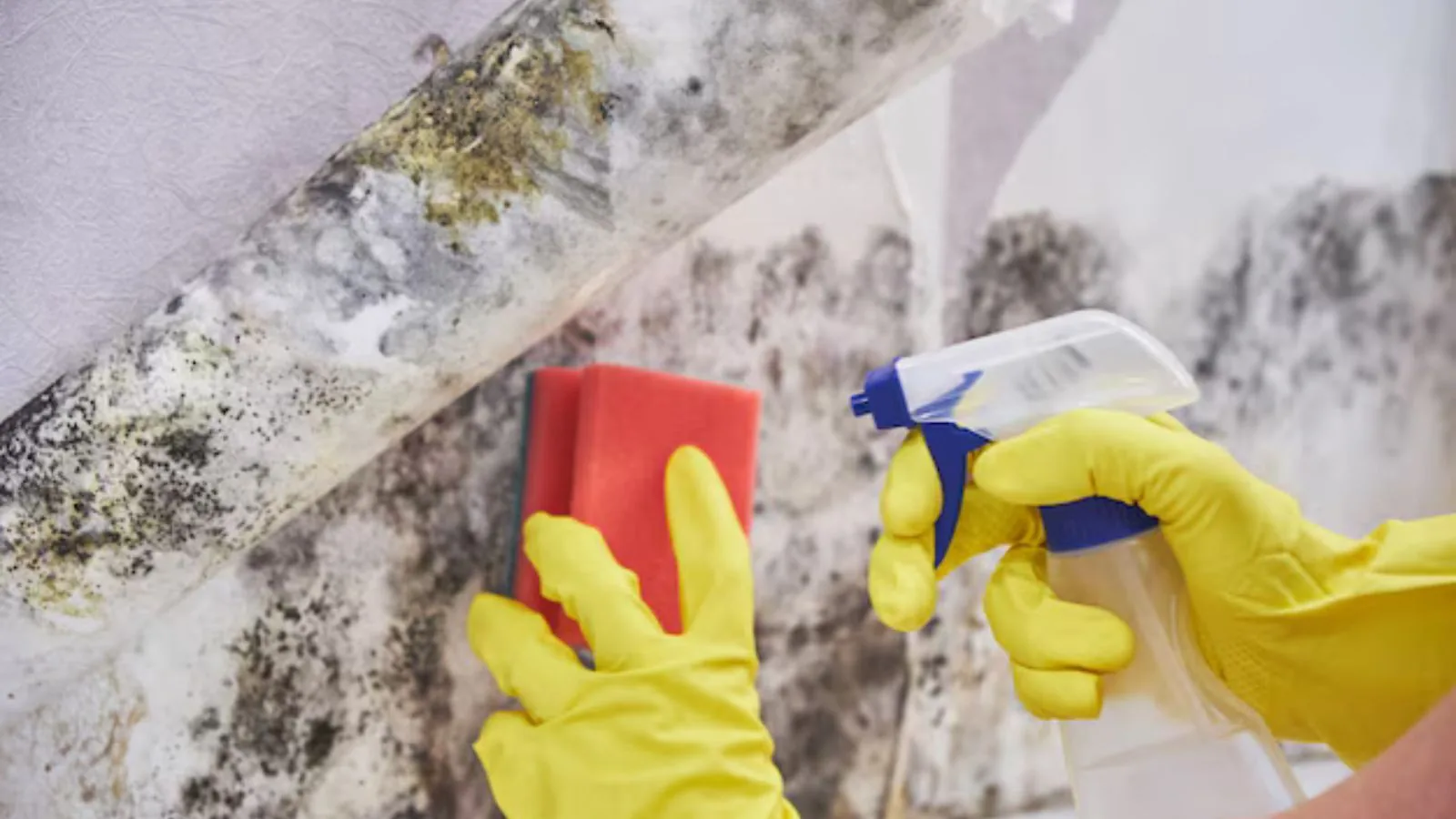
What is that musty smell and black spotting on my wall?
A musty smell with dark spotting on drywall, ceilings or baseboards is a common sign of mold. It means moisture has been present long enough for growth. In Lowcountry humidity, mold can start within a day or two on damp materials.
Mold remediation removes the growth and the conditions that created it. Cleaning the surface alone does not work if the wall is still wet.
Where mold shows up
Walls and ceilings
Dark spots or fuzzy patches appear on painted surfaces.
Baseboards and trim
Moisture wicks into trim and grows mold at the bottom.
Under sinks and cabinets
Leaks keep cabinets damp.
Attics and crawl spaces
Humid air and leaks promote growth.
Closets and corners
Poor airflow holds moisture.
HVAC vents
Condensation feeds growth near registers.
Do not disturb it
Avoid scrubbing or spraying bleach on large patches, because that can release spores. The U.S. Environmental Protection Agency suggests professional help for mold areas larger than about 10 square feet.
Turn off fans pointed at the area and close doors to limit spread. Photograph the growth and the moisture source.
How we remediate mold
Contain
We seal the area and set negative air to prevent spread.
Remove
Affected materials are cut out and bagged.
Clean
HEPA vacuuming and cleaning remove spores.
Dry and verify
Moisture is controlled so mold does not return.
Fix the water first
Mold returns if the source is still active. We help find it, whether a plumbing leak, roof leak or high humidity, and dry the structure. See structural drying for how we confirm dryness.
Wet carpet and walls are common starting points, so see carpet restoration and wall repair.
What affects the scope
Area affected
Small spots are easier than whole rooms.
Material type
Porous materials are removed.
Hidden growth
Behind walls adds demolition.
Moisture source
Fixing the source is required.
| Material | Mold behavior | Typical action |
|---|---|---|
| Drywall | Grows into paper face | Remove if growth is present |
| Wood framing | Surface growth | Clean and dry |
| Carpet | Deep growth | Remove |
| Concrete | Surface only | Clean |
Mold and insurance
Mold coverage varies and often depends on whether it followed a covered water loss. Document growth and the source and ask your agent about limits.
Related work
Mold often follows an unaddressed leak. See AC leak water damage and crawl space water damage for common causes.
Mold and the Lowcountry climate
Mold spores are always in the air, and what they need to grow is moisture, food and time. In the Lowcountry, warm temperatures and humidity from May through October shorten the time between a leak and visible growth. That is why we stress fast drying after any water loss.
Controlling indoor humidity, fixing leaks and keeping air moving are the best long-term protections. Remediation is only lasting when the building stays dry afterward.
What happens after cleanup
After removal and cleaning, we check moisture levels and discuss repairs. If you need documentation for a home sale or lender, a separate mold assessor can test and write a report, and we can coordinate timing around that.
Keep records of the work, the dates and the moisture readings. They help with insurance and future buyers.
Questions to ask any mold contractor
Ask what area will be contained, how air will be filtered and what happens to removed materials. Ask how the moisture source will be found and how drying will be verified. A clear answer to each tells you the job is planned rather than guessed.
Be cautious of anyone who promises to kill mold with a single spray or quotes a price without seeing the space. Our scope and price are explained before work starts.
What to do and what not to do before help arrives
- Fix or stop the moisture source if you can do so safely.
- Keep the area closed off and turn off fans that blow toward it.
- Do not scrub or sand moldy surfaces, because that can spread spores.
- Do not use the HVAC system if it may carry spores through the home.
- Wear an N95 respirator and gloves if you must enter the room.
Questions from Johns Island homeowners
Hidden moisture and mold are common causes. Readings can confirm.
Any mold can cause problems for sensitive people. Remove it and fix the moisture.
Bleach does not solve moisture, and it can leave spores behind on porous materials.
Not always. Visible mold usually calls for removal. Testing may help for sales or disputes.
Small jobs take a day or two. Larger jobs take longer.