
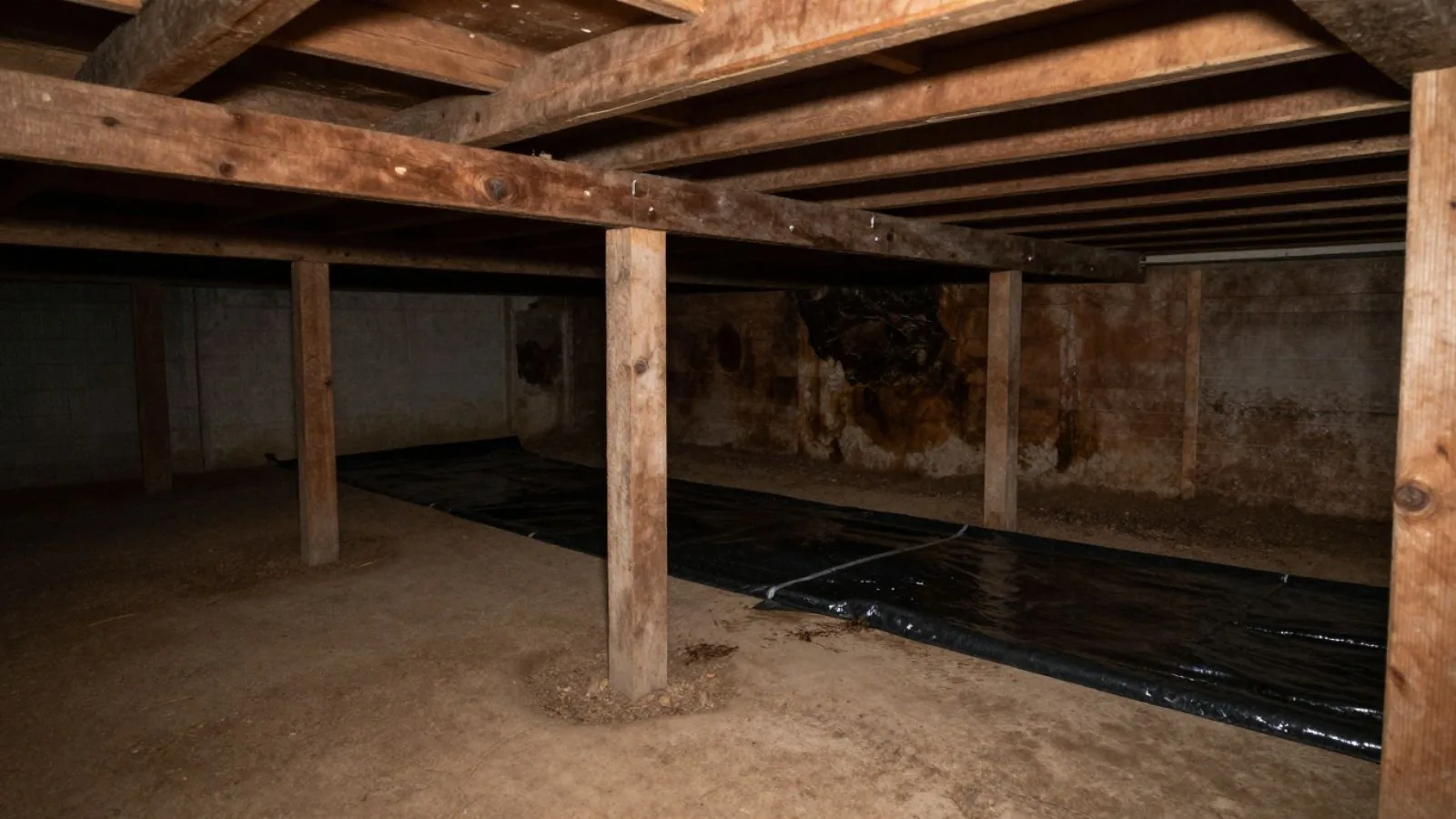
A crawl space is the part of the house nobody checks until something smells. Water enters from plumbing leaks, rain runoff, high humidity or groundwater, and it can sit unnoticed for months in the dark.
We remove standing water, dry the space and the subfloor, and treat the conditions that kept it wet. A plumber fixes leaking lines, and a contractor handles grading or encapsulation.
How water gets under a Lowcountry home
Plumbing leaks
Supply lines and drains above or in the crawl space leak slowly.
Roof and gutter runoff
Water that drains toward the foundation seeps in.
High groundwater
Low-lying lots near tidal creeks can have a high water table.
Humidity
Vented crawl spaces pull in humid air that condenses on cool surfaces.
Appliance leaks
Water from a washer or dishwasher drops through floor penetrations.
Storm surge and flooding
Water enters through vents and openings.
Signs the crawl space is wet
Look for musty odors in the house, floors that feel soft or bounce, sagging insulation, cupped flooring and pests. Moisture in the crawl space can raise humidity in the rooms above and attract termites.
If you can safely enter, check for standing water, dark staining on joists and wet insulation. Do not enter a crawl space with electrical hazards or deep standing water.
How we dry a crawl space
Inspect and measure
We check moisture levels in framing and subfloor.
Remove standing water
Pumps and extractors clear the space.
Remove wet insulation and debris
Saturated insulation is replaced.
Dry and monitor
Dehumidifiers and air movers dry the space until readings are normal.
Why dryness matters here
Wood framing that stays above about 20 percent moisture can support mold and decay. In the Lowcountry's humid climate, a crawl space that is not controlled can stay damp for months. This can spread musty air into the home and damage floors.
If mold has already started, see mold remediation for the next step, and structural drying for how we dry the framing itself.
What affects the scope
Water depth and area
Larger spaces take more equipment and time.
Insulation
Wet insulation is removed and replaced.
Source
Fixing the source is needed for lasting results.
Access
Tight access slows work and changes the method.
| Condition | Concern | Typical step |
|---|---|---|
| Standing water | Active source | Extract and find source |
| Wet insulation | Holds moisture | Remove and replace |
| Damp joists | Mold and decay | Dry and treat |
| High humidity | Condensation | Dry and control moisture |
Crawl space water and claims
Sudden pipe leaks are often covered, and groundwater or seepage often is not. Keep photos of the source, the standing water and your repair records.
Related problems
A cracked line in a freeze is covered under frozen pipe damage. If your home is outside the island, we also serve Ravenel and nearby towns.
Why the space under the house matters to the rooms above
Air moves from the crawl space into the living area through gaps around pipes, ducts and floor penetrations. When the space is damp, that air carries moisture and odor upward. Floors may feel cold or soft, and the whole house can smell stale.
Drying the crawl space often improves the indoor air within days. We also check insulation, vapor barriers and vents so you know what to ask a contractor about next.
Pests, wood and the long view
A wet crawl space attracts termites, rodents and other pests. Wood that stays damp also softens, and that can weaken joists and sills over time. We point out damaged wood so you can have a contractor or inspector look at it.
Dry conditions are the best long-term defense. Fixing leaks, extending downspouts and managing humidity all help.
Questions from Johns Island homeowners
It depends on the source. A leaking pipe or fast-rising water is urgent. A damp but stable space still needs drying soon.
Fans alone rarely work in humid air. Dehumidifiers and moisture control are needed.
It can, especially on wood and insulation. Quick drying lowers the risk.
We focus on water damage and drying. Encapsulation is a separate contractor service.
Fix the source, improve drainage away from the foundation and control humidity.