
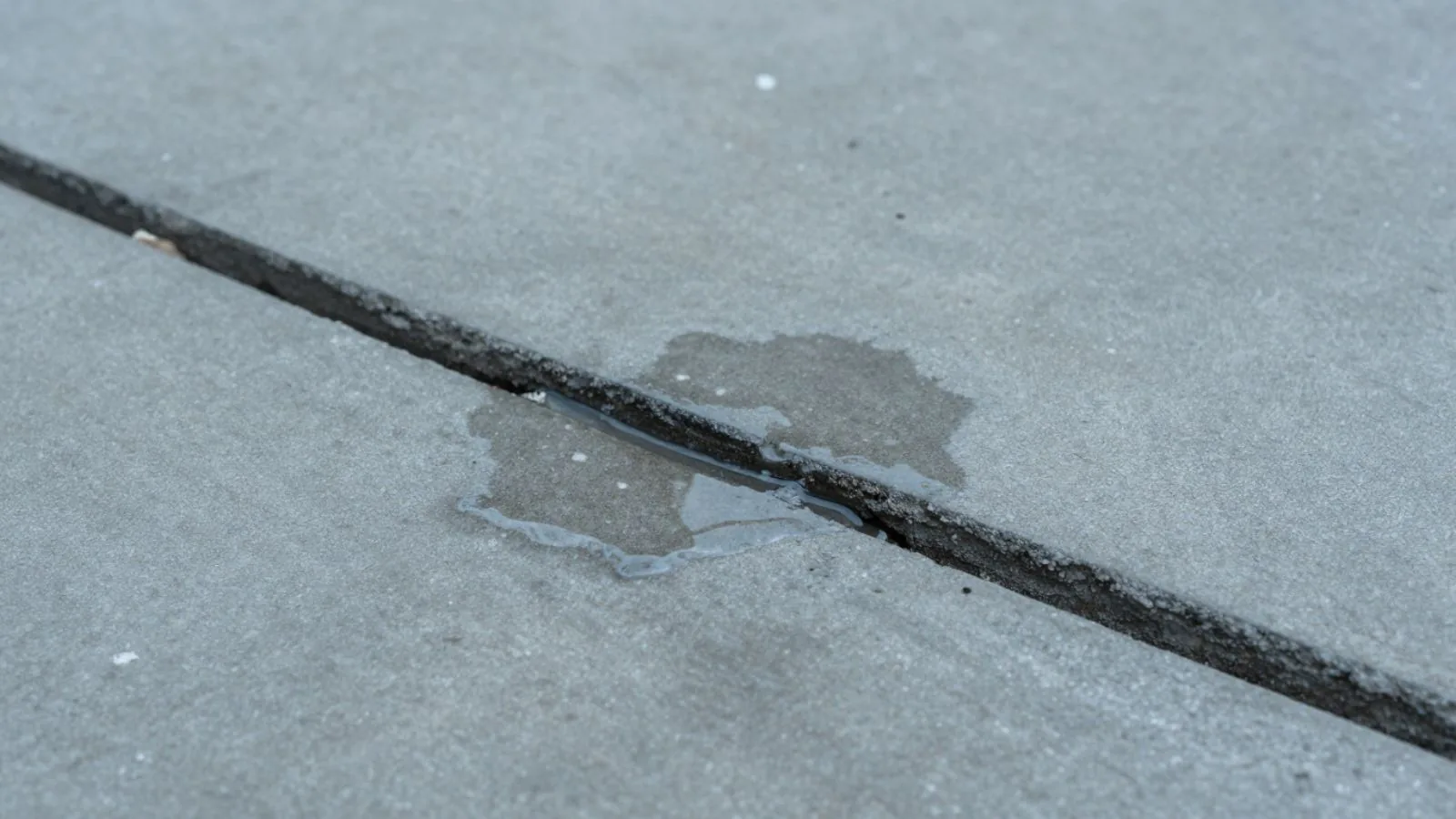
Why is there a warm spot on my floor and a high water bill?
Those are the classic signs of a slab leak. A pressurized pipe under or inside the concrete slab leaks into the soil and moves up through cracks into flooring and walls. You may hear running water when everything is off, feel a hot spot where a hot line leaks, or see a water bill climb with no change in use.
A slab leak is a plumbing problem first and a water damage problem second. A plumber finds and repairs the line, and we dry what the water soaked and repair the damage it left.
Signs the leak is under your floor
A warm or hot floor patch
A leaking hot line warms the concrete above it.
Sound of running water
A faint hiss with all fixtures off points to a pressurized leak.
A climbing water bill
Check your meter. If it moves with everything off, water is escaping somewhere.
Damp carpet or lifting tile
Water rising through the slab shows up at seams and edges first.
Cracks in the foundation or wall
Water under a slab can shift soil and open cracks.
Low water pressure
A large leak steals pressure from the fixtures.
What to do while you wait
Safety steps for a suspected slab leak
Turn off the main water to stop the leak. Check that the water meter stops moving, which tells you the leak is on the house side.
If a hot line is leaking, the floor may be hot enough to burn. Keep children and pets off the area and do not walk barefoot on tile.
Photograph the bill, the meter and any wet or warm spots. Then call a plumber to locate the leak and call us for the water damage.
Why slabs hide leaks so well
Johns Island homes are built on slabs, piers or crawl spaces, depending on age and elevation. On a slab, pipes sit in or under the concrete, so a leak has nowhere to go but down into soil or up through cracks. Many slab leaks run for weeks before moisture reaches a visible surface.
That delay is why water bills matter. Check your statement from Charleston Water System or St. John's Water Company for a jump you cannot explain.
How we handle slab leak cleanup
Map the moisture
Meters and thermal imaging show where water is under or in the floor.
Extract and open
Standing water is removed and affected flooring or baseboards are lifted.
Dry the slab and walls
Dehumidifiers and air movers dry the concrete surface and the cavity above it.
Repair after the fix
Once the plumber has repaired the line, we restore flooring and walls.
What changes the scope
How long it leaked
Weeks of slow leaking soak deeper than a recent break.
Floor covering
Tile, laminate and carpet each need different handling.
Walls affected
Water wicks into the bottom of drywall and cabinets.
Humidity indoors
A damp slab keeps humidity high and slows drying.
Slab leaks and insurance
Policies treat slab leaks differently. Some cover the resulting water damage but not the cost to reach the pipe. Ask your agent about both before work starts and keep your plumber's report.
Related problems
A slab leak that wets a whole room is also a structural drying job, and cracked supply lines may qualify as a burst pipe loss. We serve North Charleston and the other nearby towns as well.
Questions from Johns Island homeowners
Look for warm floor spots, a running meter with everything off, the sound of water, damp flooring and an unexplained water bill increase. A plumber can confirm with leak detection equipment.
Yes, if moisture stays in flooring, cabinets or drywall. Fast drying lowers the risk, and see mold remediation for what to do if growth appears.
Yes. Our line is open 24/7, including nights, weekends and holidays, and the call is the first step for a slab leak.
Tell the dispatcher where the water is coming from, what is wet and whether the source is shut off. Same-day response is offered when available, and the scope and price are explained before work starts.
A licensed plumber does that. We do not repair plumbing. We dry the structure and repair the damage.
Yes. Turn off every fixture and appliance and watch the meter. If it moves, water is escaping on the house side.
Often yes, but a hot-line leak may heat the floor and a large leak may need the water off. Ask the crew and the plumber what is safe.