
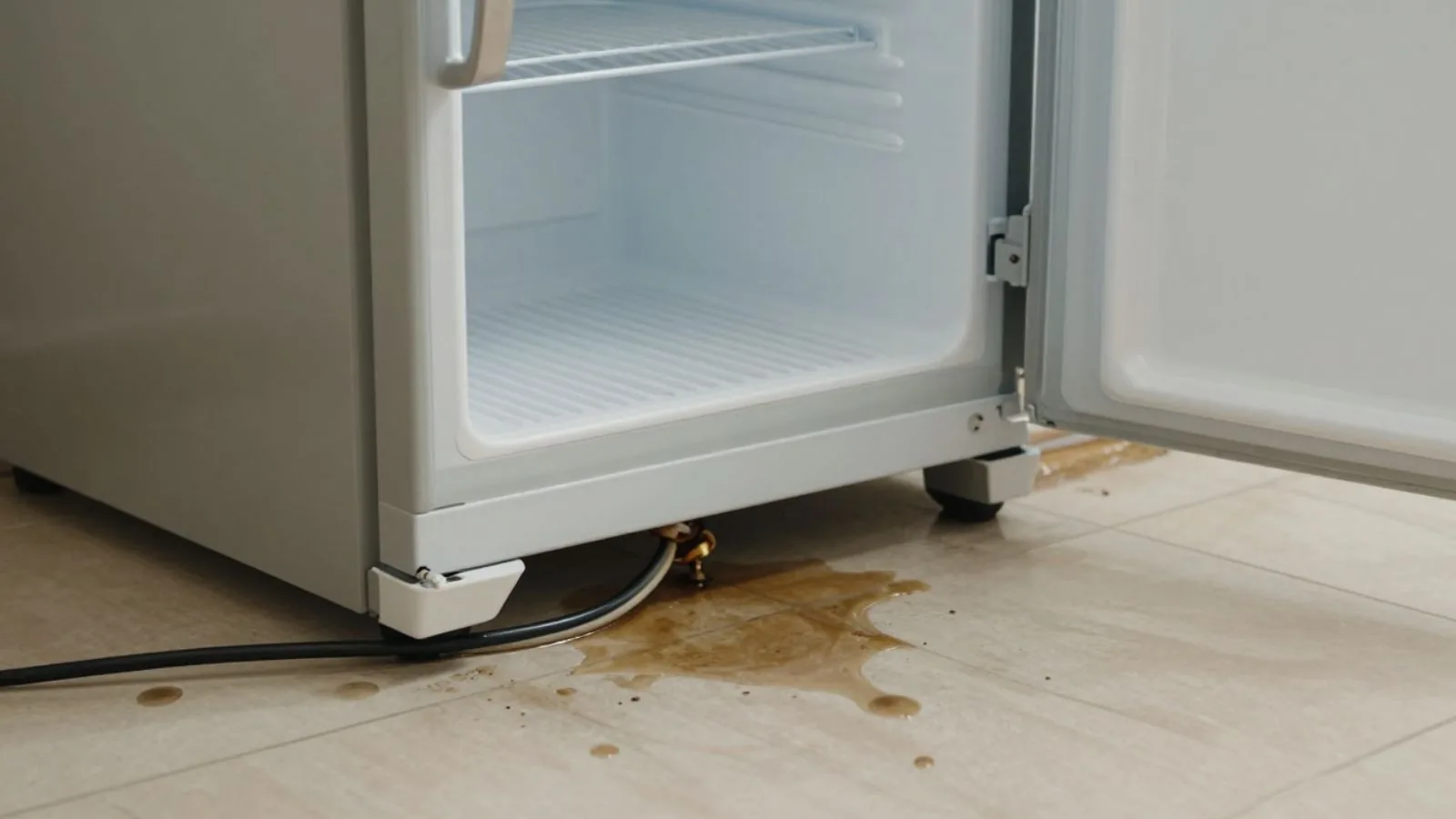
Appliance leaks are among the most common water losses in a house, and also among the easiest to miss. A cracked washer hose, a failed dishwasher seal or a clogged ice maker line can run for hours with no one nearby.
We remove the water, dry the floor and cabinets, and repair what had to be opened. Your appliance repair person or plumber fixes the appliance, and we make sure the building is dry.
Stop the leak, then call
Safety checklist for appliance leaks
Unplug the appliance only if you can reach the plug without standing in water. Otherwise turn off the breaker for that circuit.
Close the shutoff valve behind the appliance. If you cannot reach it, shut the main water supply.
Move the appliance away from the wall if it is safe and you can do so without lifting a wet unit. Photograph hoses, valves and the water line on the floor.
Which appliances leak the most
Washing machines
Supply hoses burst under pressure, and drain hoses slip out of standpipes during spin cycles.
Dishwashers
Door gaskets, inlet valves and drain lines can fail and wet the cabinet base.
Refrigerators
Ice maker lines and drip pans leak into the floor under the unit.
Water softeners and filters
Fittings and brine lines leak in a utility closet.
Garbage disposals
Seals and drain connections leak into the sink cabinet.
Window units and humidifiers
Overflow and condensate lines wet the nearby floor.
How water moves from the appliance
Water rarely stays where it starts. It runs under cabinets, into the gap behind baseboards and down through floor seams to the subfloor. On slab-on-grade homes it spreads thin across the surface and wicks into cabinet bases and wall bottoms.
A dishwasher or washer leak that reached a kitchen counts as a kitchen water damage case when cabinets and flooring are involved.
What we do
Pull and extract
We remove standing water and open toe kicks and baseboards.
Check hidden areas
Moisture meters and thermal imaging find water under cabinets and in walls.
Dry in place
Air movers and dehumidifiers dry the cabinets, subfloor and walls.
Restore
Flooring, trim and cabinet parts are repaired or replaced after drying.
Slow leaks versus sudden ones
A hose burst is a sudden loss. A slow drip behind a refrigerator may run for weeks, which makes the damage deeper and the claim harder. Look for soft flooring, warped cabinet bases and a musty smell near the appliance.
Slow leaks often involve mold, so our mold remediation page explains when growth needs separate handling.
What affects the scope
How long it leaked
Hours cost less than weeks.
Cabinet and flooring type
Solid wood, laminate and engineered boards react differently.
Subfloor involvement
Water that reached the subfloor needs more drying time.
Adjacent rooms
A laundry leak that spread into a hallway adds square footage.
Appliance leaks and insurance
Sudden appliance failures are often covered, while slow leaks and worn parts often are not. Keep the failed hose or part for inspection and document the date you found the damage.
Related water loss
A leaking heater is a different case, covered under water heater leak cleanup, and a hose that burst under pressure falls under burst pipe cleanup. We also serve Charleston and the rest of the nearby area.
Preventing the next appliance leak
Replace rubber washer hoses with braided stainless lines and check them for bulges. Turn off washer valves when you leave on a trip, and look behind the refrigerator and dishwasher when you clean.
Leak sensors that sound an alarm are inexpensive and often worth putting under sinks, near water heaters and behind appliances.
Questions from Johns Island homeowners
Yes. Our line is open 24/7, including nights, weekends and holidays, and the call is the first step for an appliance leak.
Tell the dispatcher where the water is coming from, what is wet and whether the source is shut off. Same-day response is offered when available, and the scope and price are explained before work starts.
Not until the leak is fixed and the area is checked for wetness. Using it again can spread more water.
Look for staining or soft flooring near the base and a pan that overflows. A moisture meter or thermal camera can confirm.
Often yes for sudden failures. Wear-and-tear leaks are less likely to be covered, so ask your insurer.
No. We handle water removal, drying and repair. An appliance technician or plumber fixes the unit.
Not always. Solid wood cabinets can often be dried. Particleboard bases swell and are usually replaced.