
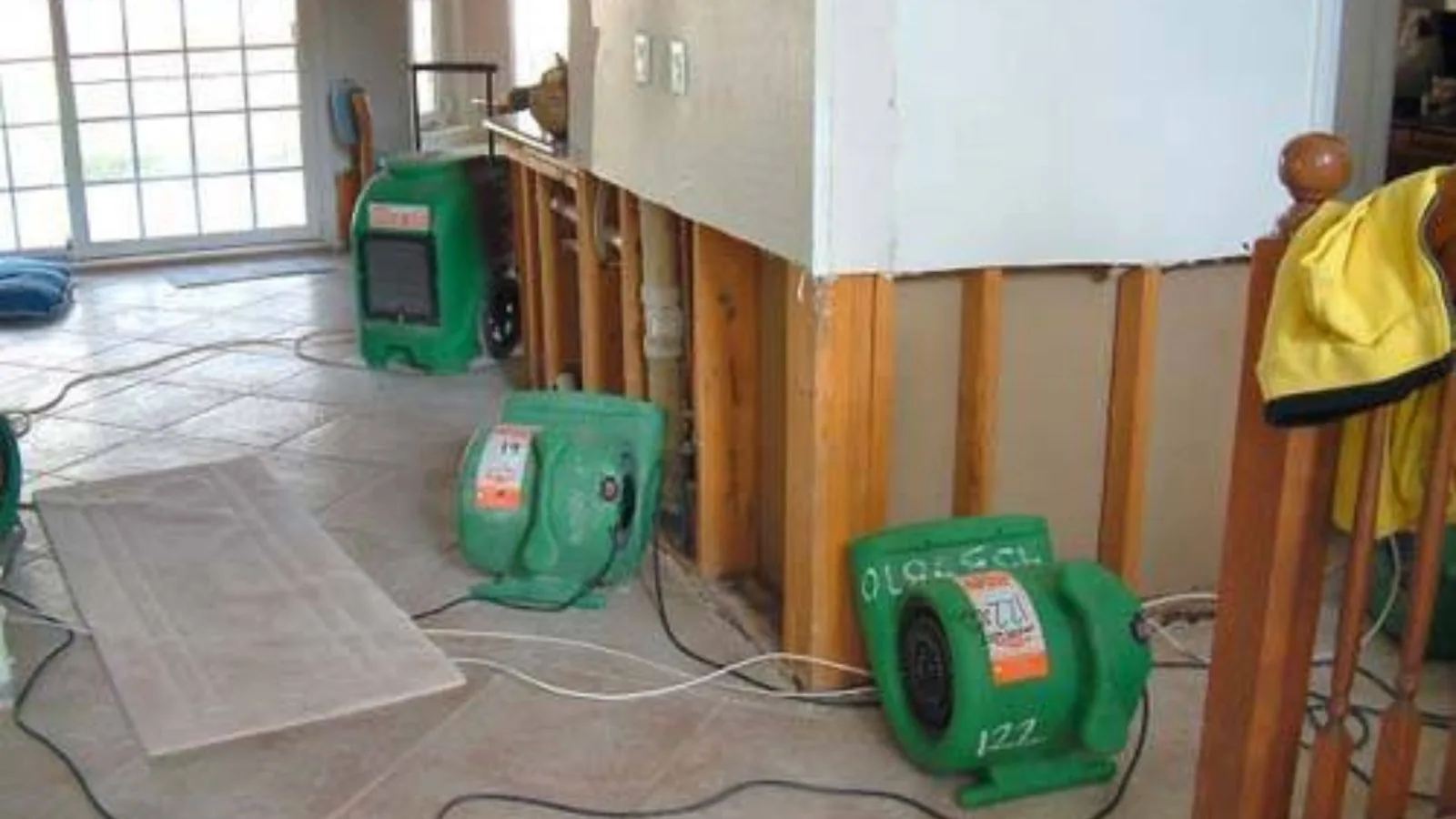
Drywall is paper and gypsum, and both absorb water. A leak at the bottom of a wall can wick upward several inches, and a leak in the top can run down inside the cavity.
We find the wet area, decide whether to dry it in place or cut it out, and then rebuild the wall to match.
Signs of wet drywall
Stains and discoloration
Brown or yellow marks mean water has soaked through.
Bubbling and peeling paint
Moisture lifts the paint from the surface.
Soft or crumbly spots
Gypsum breaks down when wet.
Baseboard separation
Trim pulls from swelling drywall.
Musty odor
Moisture behind paint smells before it shows.
Warm spots
A thermal camera shows differences in temperature.
What to do first
Find and stop the source if you can. Do not paint over stains, and do not drill into a wall that may contain wires or pipes.
Photograph the wall, then call us to check moisture and decide on cut-out and drying.
Dry in place or cut it out?
Clean-water leaks caught quickly can often be dried in place with air movers and dehumidifiers. Contaminated water, long exposure or crumbling drywall call for cutting the affected section out.
Cutting out drywall is also how we dry the insulation and framing behind it. See structural drying for how we confirm dryness.
Our repair process
Find the moisture
Meters and thermal imaging map the wet area.
Open and dry
Wet sections are removed and the cavity is dried.
Rebuild
New drywall is hung, taped and textured.
Finish
Primer and paint are applied.
Humidity and drywall in the Lowcountry
Lowcountry humidity slows evaporation, so a wall that was wet can stay damp inside for days. Dehumidifiers matter here because they pull moisture from the air faster than the wall can release it.
Moisture trapped in a wall can lead to mold, so if you see growth, see mold remediation.
What affects the scope
Wall size
Small patches are quick. Whole walls are larger projects.
Insulation
Wet insulation is removed and replaced.
Texture
Matching old textures is detailed work.
Paint
Painting corner to corner keeps colors consistent.
Walls and claims
Insurers cover sudden leaks that damage walls. Photograph the wall before opening it and keep a sample of wet drywall if requested.
Related work
If the water came from above, see ceiling repair. For an under-sink leak, kitchen water damage may apply.
Insulation, framing and what is behind the wall
Behind drywall are studs, insulation, wiring and sometimes plumbing. Wet insulation packs down and holds water against framing, so it is usually replaced. Wood studs can often be dried and left in place if they are cleaned and tested.
Cutting a clean opening lets us dry the cavity properly and see whether hidden mold or pipe damage is present.
Finishing so the repair disappears
A good drywall repair needs tape, joint compound, texture and paint. Skipping any of these leaves a visible patch. We prime new drywall before painting and paint to the nearest corner to blend the color.
If the room has a distinctive texture, we test a sample before finishing so you can approve the match.
Old stains and new leaks
A brown ring on a wall is not always an active leak. Old stains can remain after a problem is fixed, and new moisture can hide behind fresh paint. A moisture meter reading tells you which one you have.
If the reading is high, we trace it to the source before closing anything up. If it is normal, the repair is cosmetic.
Questions from Johns Island homeowners
Sometimes, if the water was clean and caught quickly.
Only as big as needed, often a few inches above the wet line.
Yes. We match texture and paint as closely as possible.
Drying takes days. Rebuilding adds a few more visits.
Moisture behind the paint is the usual cause. Have the wall checked.