
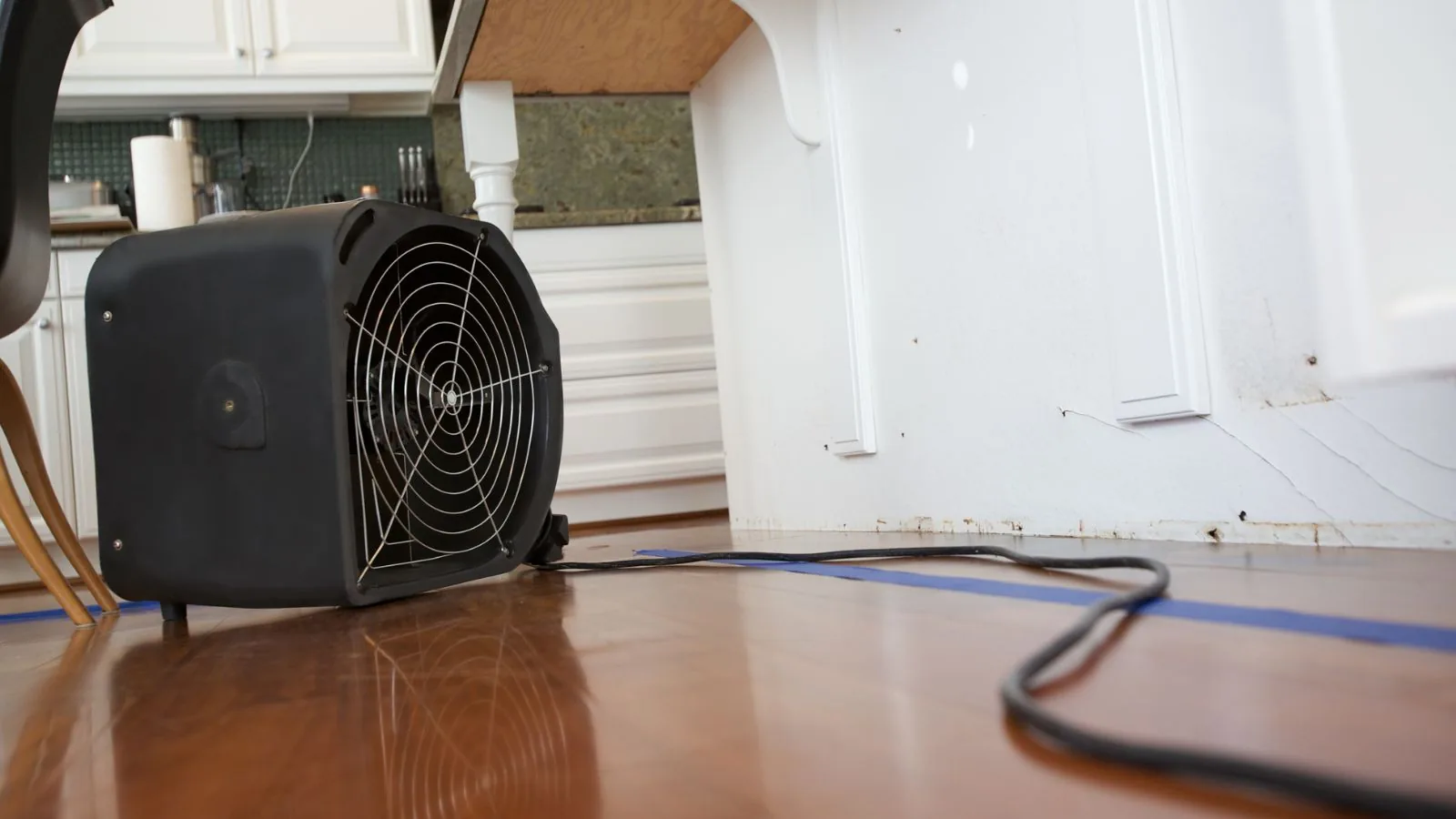
Kitchens combine supply lines, drains, appliances and finished cabinetry in a small space. A small leak under the sink can soak the cabinet base and subfloor before it reaches the open floor.
We find the water, dry cabinets and floors, remove what cannot be saved and repair the kitchen. Plumbers and appliance technicians fix the source.
Where kitchen leaks start
Under the sink
Supply lines, shutoff valves and drain traps leak into the cabinet base.
Dishwasher
Door seals, inlet valves and drain lines can fail.
Refrigerator
Ice maker lines and drip pans leak into the toe kick.
Disposal and faucet
Seals and fittings drip down the cabinet.
Wall behind the range
Gas and water lines share this space in some homes.
Upper cabinets
Leaks from a bathroom or roof above can reach upper cabinets.
First steps after a kitchen leak
Close the shutoff valve for the leaking fixture, or the main if you cannot find it. Empty the cabinet and remove items that can stain or mold.
Photograph the damage and open cabinet doors to let air in. Then call us, because wet cabinets can swell within a day.
What makes kitchens harder to dry
Cabinets, toe kicks and countertops trap water in closed spaces. Particleboard bases swell and lose strength, while solid wood and plywood dry better. Flooring under cabinets often stays wet long after the surface looks dry.
In the Lowcountry's humid air, that trapped moisture can sit for days if drying is not controlled. A kitchen appliance leak is closely tied to appliance leak cleanup.
Our process
Locate and document
Moisture meters and photos map the damage.
Remove toe kicks and wet material
We open the cabinet base and lift flooring where needed.
Dry in place
Air movers and dehumidifiers dry the kitchen.
Repair
Cabinets, flooring and walls are repaired or replaced.
What affects the scope
Cabinet material
Particleboard often needs replacing. Plywood and solid wood can often be dried.
Flooring type
Tile is simple. Hardwood and laminate need more care.
Counter and backsplash
Stone and laminate usually stay, but may be lifted for access.
Duration
Overnight leaks are bigger than a leak caught in minutes.
Kitchen leaks and claims
Sudden leaks from plumbing or appliances are often covered. Document cabinet condition and the failed part, and keep receipts for emergency mitigation.
Related work
Wet hardwood in the kitchen may need hardwood floor repair, and a pipe break behind a wall may fall under burst pipe cleanup.
Cabinets, toe kicks and the hidden floor
Toe kicks are the first place to look because water runs under cabinets and stays there. We remove them to see the floor and the underside of the cabinet boxes. A wet cabinet base can be dried when it is plywood or solid wood and reached early.
Countertops usually stay in place unless a plumber needs access. If a countertop must be lifted, we coordinate so it goes back cleanly.
Appliance and plumbing coordination
Kitchens often need three trades. A plumber fixes the line, an appliance technician checks the unit, and we dry and rebuild. We share moisture readings with each so no one works on a wet floor.
Keeping the kitchen usable
Many families need to cook while repairs are underway. We plan the work so the sink and stove are available as soon as it is safe, and we tell you which parts of the kitchen to avoid while equipment runs.
Temporary setups such as a microwave station in another room are common, and we work around them.
What to do before help arrives
- Shut off the water at the fixture valve or the main.
- Turn off power to the kitchen at the panel only if you can reach it from a dry spot.
- Do not run the dishwasher, disposal or refrigerator if water touched their electrical parts.
- Lift small items and food off wet floors and counters.
- Take photos of the damage before you clean up.
Questions from Johns Island homeowners
Often yes if they are solid wood or plywood and dried quickly. Particleboard usually has to be replaced.
Usually several days. Moisture readings show when the cabinets, wall and floor are dry.
Usually not, but the kitchen may be unusable while equipment runs.
We match what we can. If flooring continues into other rooms, a transition may be used.
If cabinets stayed wet for more than a couple of days, yes. See mold remediation if you see growth.