
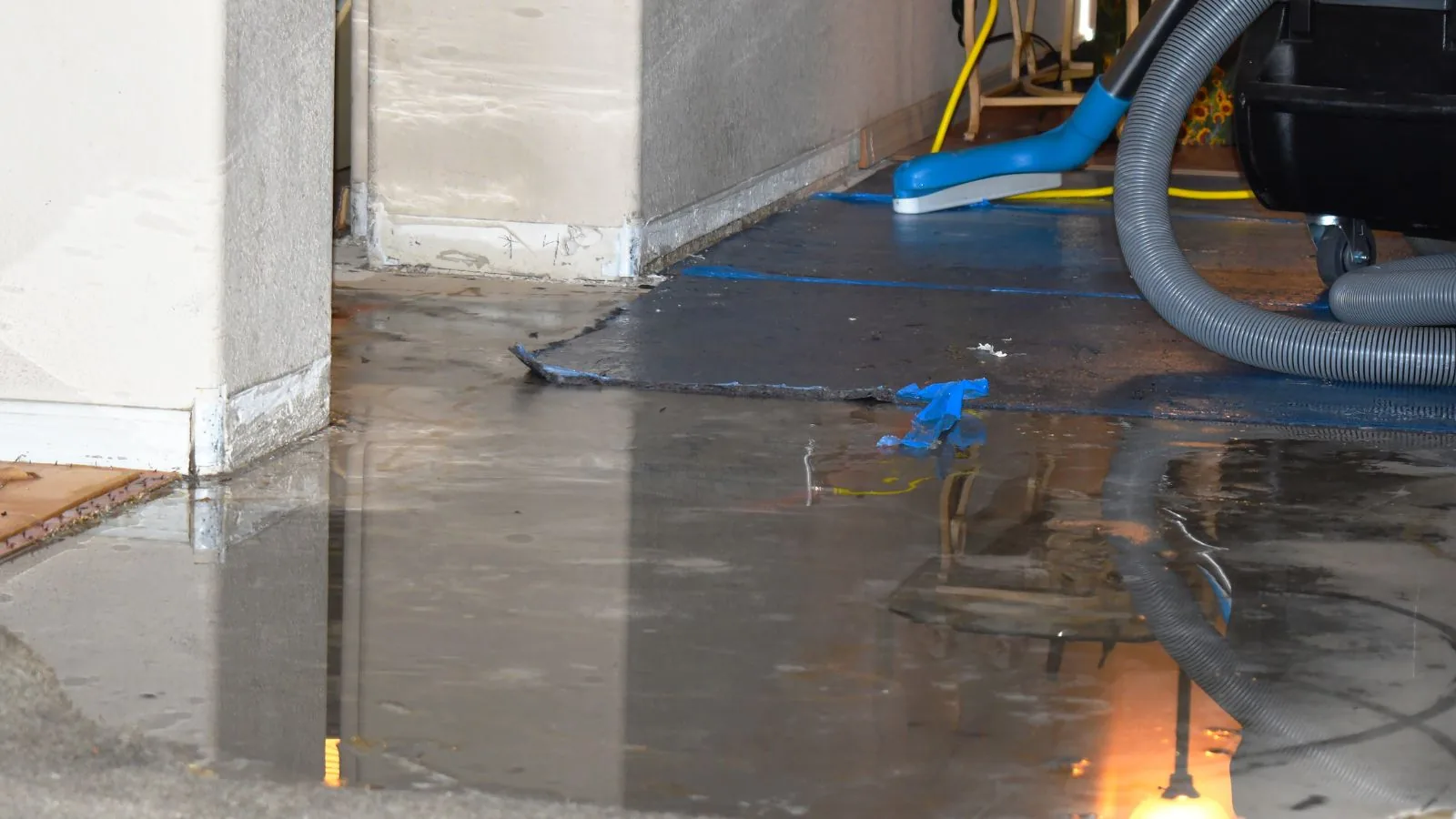
Water extraction is the first step in almost every water damage job. Before anything can be dried or repaired, the standing water has to come out of the building. On Johns Island that matters even more, because warm, humid air slows evaporation and gives mold a head start on anything left damp.
We use pumps for deeper water and extractors for carpet, pad and hard floors. Once the visible water is gone, the same visit moves to drying so the moisture in the walls and subfloor does not turn into the next problem.
Do this before the crew arrives
Safety steps while water is on the floor
Do not use household vacuums on standing water, and do not touch outlets, cords or appliances that are in contact with it. If the water is deeper than the outlets, leave the power off at the main panel only if you can reach it dry.
Stop the source if you can. Close the fixture shutoff, the main valve or the appliance supply, and tell the dispatcher what you did.
Move small rugs, shoes, books and anything that wicks water off the floor. Prop up furniture legs on foil or plastic blocks so wood and fabric do not stain the wet floor.
Where extraction gets used on Johns Island
Slab and tile floors
Water spreads thin and wide across a slab. Extraction pulls it out before it finds baseboards, door jambs and cabinet bases.
Raised foundations
Water can drop through floor gaps into the space below. We check under the house when the floor above was wet.
Carpeted rooms
Carpet and pad hold a lot of water. Extraction pulls much of it out, and the pad is often removed.
Garages and utility rooms
Washers, water heaters and floor drains leave standing water close to stored belongings.
How we pull the water out
Find the edges
We locate where the water traveled, including under cabinets and into adjoining rooms.
Pump the deep water
Submersible pumps clear anything above an inch or two so extractors can work.
Extract the rest
Wands and weighted tools pull water from carpet, pad and hard surfaces.
Measure and hand off to drying
Moisture meters show what is still wet, and drying equipment is set before we leave.
Extraction alone does not make a building dry. Moisture left in framing, subfloor and drywall keeps releasing into the air for days, which is why we continue into structural drying on the same job.
How fast does water spread through a house?
Faster than most people expect. On a slab, water finds the lowest part of the floor and then wicks upward into drywall and cabinet bases. Within a day or two, wood flooring can cup and baseboards can start to separate from the wall.
If the water has been there longer than two days, the Lowcountry climate makes mold growth a real possibility. Our mold remediation page explains what that looks like if drying was delayed.
What changes the scope of an extraction job
How deep and how wide
Depth sets the pump size. Area sets the number of passes and the drying equipment.
Water source
Clean supply-line water is handled differently from drain overflow or outside water.
What was on the floor
Carpet, pad and underlayment add removal work that bare slab does not.
How long it sat
Older standing water needs more cleaning and more drying time.
| Situation | Typical first move | Next step |
|---|---|---|
| Supply line break | Shut off water, extract | Dry framing and subfloor |
| Dishwasher or washer overflow | Extract, lift pad | Dry floor and cabinet bases |
| Rain through roof | Extract, tarp or board up | Dry ceiling and walls |
| Drain backup | Extract with protection | Clean and disinfect |
Document the water before it is gone
Take photos of the standing water, the source and the lowest affected area before extraction. Keep damaged items until your adjuster agrees they can go.
Tell your insurer what happened as soon as the situation is safe. Quick extraction is normally considered mitigation, which most policies expect you to do.
When extraction is only part of the job
A ceiling stain with water behind it needs ceiling repair, and a supply line failure may point to burst pipe damage. We also serve nearby Hanahan and North Charleston.
Questions from Johns Island homeowners
Yes. Our line is open 24/7, including nights, weekends and holidays, and the call is the first step for water extraction.
Tell the dispatcher where the water is coming from, what is wet and whether the source is shut off. Same-day response is offered when available, and the scope and price are explained before work starts.
A shop vacuum can help with a small spill of clean water. For anything deeper than a thin film, or water that reached walls and carpet pad, call so the moisture can be tracked and dried properly.
Extraction removes standing water and much of what carpet and pad hold. It does not remove moisture inside framing and drywall, which is why drying equipment follows.
Clean supply-line water is lower risk than drain, storm or flood water. If you do not know the source, treat it as unsafe and wear gloves and boots.
Often the pad is removed and the carpet is lifted or pulled back so both can dry. Whether carpet is saved depends on the water source and how long it sat.
Call anyway. Moisture hidden in walls and subfloor can stay behind after the visible water is gone, and readings will show whether drying is needed.