
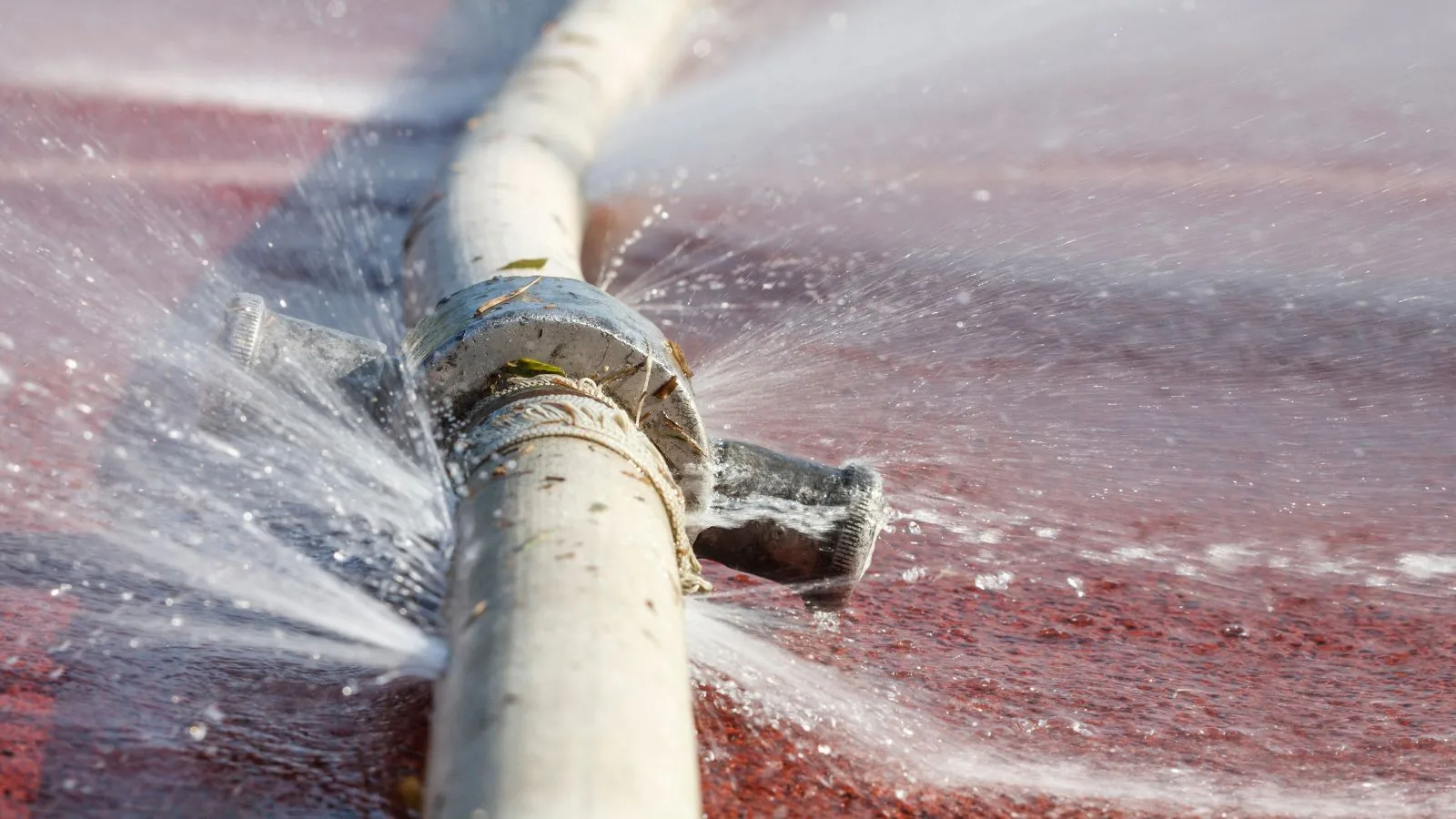
Find the main shutoff valve, turn it clockwise until it stops, then open a faucet at the lowest point to drain the lines. Do this before a trip, before a storm and any time a pipe bursts. Knowing where it is before an emergency saves minutes that can be worth thousands of dollars.
Where the main shutoff usually is
Look near the water meter at the street, where the line enters the house, in a garage, in a utility closet or near the water heater. Homes with crawl spaces sometimes have the valve under the house. A shutoff at the meter box belongs to the utility, so a separate valve on the house side is the one you use.
At the meter box
Often near the curb or property line. It may need a tool to turn.
Where the line enters the house
Look on the wall facing the street.
Near the water heater
A valve on the cold supply line.
In a garage or utility room
Common in slab homes.
Types of valves
Gate valves have a round wheel handle that turns several times. Ball valves have a lever handle that turns a quarter turn. Turn a gate valve clockwise slowly until it stops, and turn a ball valve until the lever sits crosswise to the pipe.
Locate the valve
Know where it is before you need it.
Turn it off
Clockwise for gate valves and a quarter turn for ball valves.
Open a low faucet
Drain remaining water to relieve pressure.
Check the meter
If it stops moving, the leak is on your side.
If the valve is stuck or leaks
Do not force it with a wrench or a pipe. Old gate valves can snap. If it will not close, shut the valve at the meter with a meter key if you have one, or call the utility. A plumber can replace a bad valve, and it is worth doing before the next emergency.
Fixture shutoffs save time
Under every sink, toilet and appliance there should be a small shutoff valve. Closing one often stops a leak without cutting water to the whole house. Test yours once a year to make sure they turn.
After the water is off
Photograph the leak, turn off the water heater if the tank may drain, and start removing water. Call a plumber for the repair and a restoration crew for the drying. Our burst pipe cleanup page explains what happens next.
A five-minute home drill
Set a calendar reminder and walk through this drill once a year. Find the main shutoff, turn it off and on to make sure it moves, then locate the electrical panel and the water heater shutoff. Tell everyone in the household where these are.
Tape a note beside the valve with the date you tested it. If a family member or pet sitter will be in the house while you travel, show them the valve too.
Smart shutoff devices and leak sensors
Some homeowners install automatic shutoff valves that close when a sensor detects water or unusual flow. Others put battery-powered leak sensors under sinks, behind toilets and near the water heater. These devices are inexpensive compared with the cost of a flood.
Ask a plumber what fits your system. A device does not replace knowing where the manual valve is, because batteries die and wifi fails.
What to do in the first minutes of a burst pipe
Close the main
Turn the valve fully and quickly.
Cut power if water is near outlets
Only if you can reach the panel dry.
Open low faucets
Drain pipes to relieve pressure.
Start removing water
Mop, towel and move belongings up.
Call for help
A plumber for the pipe and a restoration crew for the water.
Every minute matters. A full-size supply line can release dozens of gallons in a few minutes, and the faster it stops, the smaller the cleanup.
What to do if you rent or live in a condo
In an apartment or condo, the main shutoff may be in a utility closet, a hallway panel or a building basement. Ask your property manager where it is and whether you have your own unit valve. Tell them right away if a pipe breaks, because neighbors may be affected.
Fixture shutoffs under sinks and behind toilets still apply to you, so learn where they are.
What to do after the water is off
Open a faucet at the lowest point in the home to drain the lines, and open one at the highest point to let air in. Turn off the water heater so it does not run dry. Photograph the leak and the damage before you move anything.
Then call a plumber for the repair and call a restoration company for the drying. The two jobs are different, and the wet materials need attention whether or not the pipe has been fixed.
Who supplies water on Johns Island
St. John's Water Company is a non-profit chartered in May 1975. It buys water from Charleston Water System, which draws on the Bushy Park Reservoir and the Edisto River and treats it at the Hanahan plant. St. John's serves both city and county areas of Johns Island, plus Kiawah and Seabrook, and its office is at 3362 Maybank Highway.
Some addresses are served directly by Charleston Water System, so check your bill. For leaks after the meter, see water extraction, and for nearby coverage, see Hanahan and Charleston.
Questions we hear on Johns Island
Usually near the curb or property line in a box with a lid. Be careful of insects and standing water when you open it.
Many people do, especially for longer trips. It reduces the risk of a leak while you are away.
Close the valve at the meter or call the utility. Mark the valve once it is found.
The meter belongs to the utility, so use the house shutoff first. Ask the utility about the meter valve.
Check your bill. It will name either St. John's Water Company or Charleston Water System.