
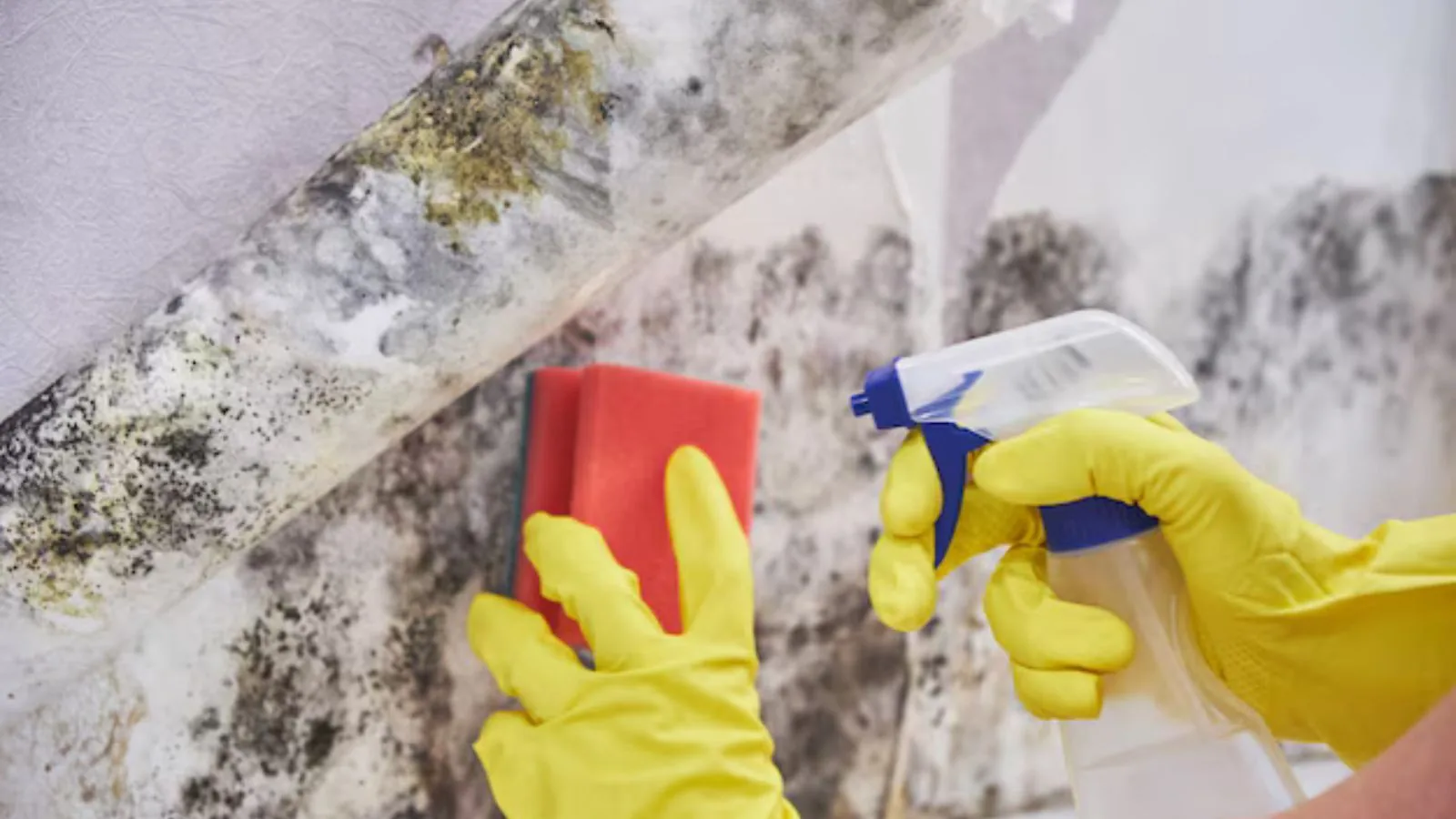
Small patches of mold on hard surfaces can be cleaned with detergent and water, and the real fix is removing the moisture that feeds it. Larger areas, mold on porous materials and growth behind walls call for a professional. This guide covers what to do and what to avoid.
Fix the moisture first
Mold needs moisture to grow. If you clean a patch but the leak, condensation or humidity is still there, it will return. Find the source, such as a plumbing leak, a roof leak or a sweating duct, and fix it before you clean.
What works on small areas
For patches on hard, non-porous surfaces such as tile, glass or sealed countertops, scrub with detergent and water, then dry the surface completely. The U.S. Environmental Protection Agency says that mold areas larger than about 10 square feet should be handled by professionals.
- Wear an N95 mask, gloves and goggles.
- Scrub with detergent and water, not dry brushing.
- Bag and discard sponges and rags.
- Dry the area fully with a fan and a dehumidifier.
What does not work
Do not mix bleach with ammonia or other cleaners, because the fumes are dangerous. Bleach also does not penetrate porous materials such as drywall, so the roots can stay behind. Painting over mold hides it but does not stop it.
| Surface | Can you clean it? | Notes |
|---|---|---|
| Tile and glass | Yes | Detergent and water |
| Sealed wood | Often | Dry fast |
| Drywall | Usually no | Remove if growth is present |
| Carpet and pad | Usually no | Discard |
| Ceiling tiles | No | Replace |
When to call a professional
Call when mold covers more than about 10 square feet, when it keeps coming back, when it is in the air system or when someone in the home has breathing problems. Our mold remediation page explains how we contain and remove growth.
Keep it from coming back
Aim for indoor humidity between 30 and 50 percent, run bathroom and kitchen fans, fix leaks promptly and keep air moving. A dehumidifier helps in closed rooms and crawl spaces.
A step-by-step cleaning method for small hard-surface spots
Start by turning off fans that blow toward the area, so spores do not spread. Mix mild dish detergent with water, wet a cloth, and scrub the surface in small sections. Rinse the cloth often, then wipe the surface with clean water and dry it completely.
Put rags and sponges in a plastic bag and seal it before putting it in the trash. Wash your hands and any clothes you wore. If the spot returns in a few days, the moisture source has not been fixed.
Humidity targets that keep mold away
Indoor humidity should stay below about 60 percent, and 30 to 50 percent is better. A small hygrometer costs little and tells you when the air is too damp. If your reading stays high, a dehumidifier in the room or an AC service call can help.
Bathrooms need a fan that vents outside and runs for 20 minutes after showers. Kitchens benefit from a range hood that actually vents out of the house. Closets on exterior walls may need a little air movement or a moisture absorber.
Mold on common household surfaces
| Place | What to do | When to call for help |
|---|---|---|
| Shower tile and grout | Scrub with detergent, rinse, dry and ventilate | Grout or caulk stays black after cleaning |
| Window sills | Wipe with detergent and dry, fix condensation | Wood is soft or the wall below is stained |
| Under the sink | Fix the leak, clean hard surfaces, replace swollen cabinet parts | Growth spreads inside the cabinet or wall |
| Closets | Improve airflow, lower humidity, clean hard surfaces | Growth covers more than a small patch |
| Attic or crawl space | Do not disturb it, call a pro | Almost always |
Use the table as a rough guide. When the surface is porous or the patch is large, the answer is almost always to call for help.
Mold in air conditioning and ducts
Air conditioning cools surfaces below the dew point, so moisture can condense on ducts, vents and air handlers. In the Lowcountry's long cooling season, that condensation can feed mold around registers, inside return plenums and near the air handler.
Do not run the system if you see growth on the coil or inside the ducts, because the fan can spread spores. Call an HVAC technician to inspect the system and fix the cause, such as a clogged drain, poor insulation or oversized equipment.
Keeping mold from coming back
Keep indoor humidity under about 50 percent, use bath and kitchen fans, and fix leaks quickly. In a humid climate, a small dehumidifier in a closet or a crawl space can help. A cheap hygrometer shows you the number so you do not have to guess.
Check problem spots every month or so. Look under sinks, around windows and behind furniture on exterior walls. Early action on a small spot is far easier than a larger cleanup later.
Mold weather on Johns Island
Lowcountry summers are warm and humid, and the Atlantic hurricane season runs June 1 through November 30. That combination keeps indoor moisture high, especially in closets, attics and crawl spaces.
If a leak is behind the problem, our AC leak water damage and crawl space water damage pages explain the usual causes, and we serve Hanahan and Charleston too.
Questions we hear on Johns Island
Vinegar can kill some mold on hard surfaces, but it does not fix moisture or remove growth from porous materials.
Bleach is not recommended on porous materials, and it should never be mixed with ammonia.
Mold can cause allergy and breathing symptoms in some people. People with asthma or weak immune systems should avoid the area.
No visible growth, no musty smell and normal moisture readings are good signs. Testing is optional.
Warm temperatures and humidity speed growth, and AC systems can cause condensation. Control moisture and humidity year round.