
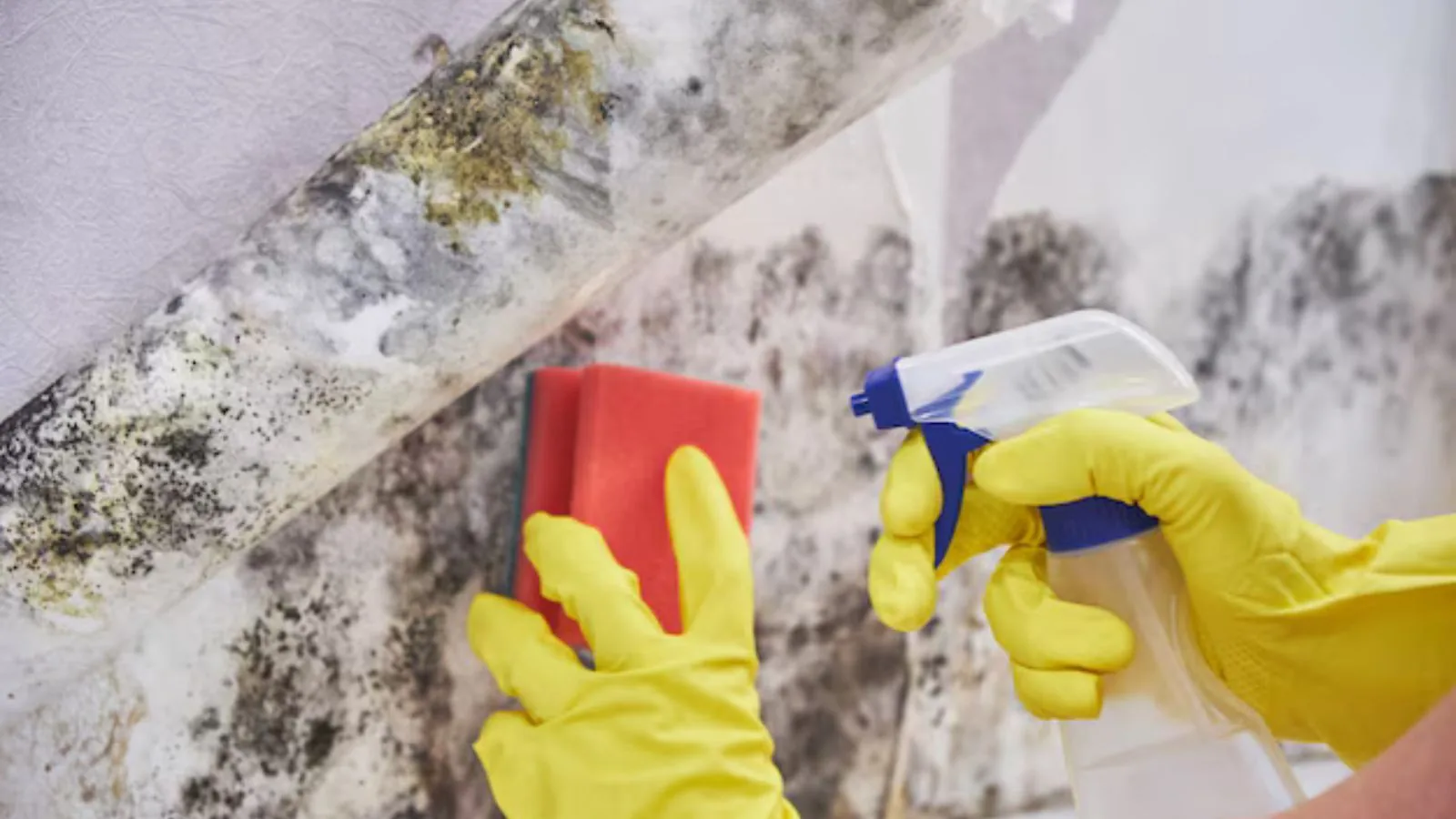
Treat black mold like any other mold: fix the moisture, clean small hard-surface spots with detergent and water, and call a professional for larger areas. The color does not tell you how dangerous it is. The Centers for Disease Control and Prevention says that you do not need to identify the type of mold to deal with it, because all mold should be removed.
What people mean by black mold
The phrase usually refers to dark mold growth of any kind, and sometimes to Stachybotrys, a greenish-black mold that grows on very wet paper-based materials. Many dark molds look the same to the eye, and only lab analysis can tell them apart.
Why it grows where it does
Dark mold shows up on drywall that stays wet, around leaking windows, under sinks, behind toilets and in attics. It needs constant moisture, so persistent growth means a persistent source.
Behind toilets and under sinks
Slow plumbing leaks keep the area damp.
Around windows
Condensation and leaks feed growth on sills and frames.
Attic undersides
Roof leaks and humidity wet the decking.
Closets on exterior walls
Poor airflow holds moisture.
Safe steps for a small spot
Protect yourself
Wear N95 mask, gloves and goggles.
Limit spread
Close doors and avoid dry scrubbing.
Clean hard surfaces
Use detergent and water, then dry.
Remove porous items
Discard affected drywall or carpet pad.
What not to do
Do not sand, burn or blast dry mold, because it releases spores. Do not mix chemicals. Do not paint over it. And do not ignore the moisture source, since nothing you do will last without that fix.
When it is time for professionals
If the mold is larger than about 10 square feet, is behind walls or in the HVAC system, or if anyone at home has asthma or a weak immune system, hire a professional. Our mold remediation service uses containment and HEPA filtration, and our structural drying work addresses the moisture.
What to expect from professional black mold removal
A professional job begins with finding the moisture source and setting up containment. Plastic sheeting seals off the area, and a negative air machine with a HEPA filter keeps spores from drifting into the rest of the house. Workers wear respirators and protective suits.
Materials with growth, such as drywall and insulation, are cut out and bagged. Surfaces that remain are HEPA vacuumed and cleaned. The area is dried and checked before it is closed up and rebuilt.
Health and when to see a doctor
Mold can cause nasal stuffiness, eye irritation, wheezing and skin irritation in some people. People with asthma, allergies or weak immune systems may react more strongly. If you have symptoms that persist or are severe, talk with a doctor, and tell them about the mold exposure.
Avoid sleeping or spending long periods in a room with visible growth until it is addressed, and do not run central air through the affected area.
Myths about black mold
- Myth: black mold is always toxic. Fact: color does not predict risk, and many molds look dark.
- Myth: bleach cures it. Fact: bleach does not penetrate porous materials and ignores moisture.
- Myth: if you cannot see it, it is not there. Fact: growth often hides behind walls and under flooring.
- Myth: a spore test tells you everything. Fact: tests show a moment in time and need careful interpretation.
The most useful steps are the dull ones. Find the leak, dry the area, remove contaminated porous materials and keep humidity in check.
Keeping records if you rent
If you rent, report mold to your landlord in writing and keep a copy. Include photos, dates and a description of the moisture source if you know it. Landlords are responsible for many repairs, and written notice starts the clock.
Do not try to remove large areas of mold yourself in a rented home. Ask the landlord to arrange professional help, and keep your own belongings out of the area until it is resolved.
When cleaning is not enough
If the stain returns within a few weeks, the moisture source is still active. Cleaning the surface will not stop mold that is fed by a slow leak, a damp crawl space or high indoor humidity. Fix the source first and then clean.
Porous materials such as drywall, ceiling tile and carpet pad are usually removed rather than cleaned. Mold grows into them, and surface cleaning does not reach the roots. A professional can tell you which materials can be saved.
Protecting yourself while you work
Wear an N95 respirator, gloves and eye protection. Keep the area closed off from the rest of the home, and bag debris before you carry it out. People with asthma, allergies or weak immune systems should leave the job to professionals.
A note on bleach and other products
Bleach can lighten stains on hard, non-porous surfaces, but it does not reach roots in porous materials. Never mix bleach with ammonia or other cleaners, because dangerous fumes can form. Detergent and water is a safer first step.
A Lowcountry note
Charleston's humid subtropical climate means air conditioning runs for much of the year, which creates cold surfaces where moisture condenses. Ducts, vents and exterior walls are common spots for dark spotting.
If you find growth below a leaking fixture, see water heater leak cleanup or appliance leak damage. We serve Ravenel and North Charleston as well as Johns Island.
Questions we hear on Johns Island
The color is not a reliable guide. Any mold growth should be removed and the moisture fixed.
Testing is not required to remove it. Testing may help for a sale or a dispute.
It may lighten stains on hard surfaces, but it does not solve moisture and does not penetrate porous materials.
Usually because the moisture source is still active or the humidity is high.
We do not have local statistics. Warm, humid conditions mean any leak can lead to growth if it is not dried.