
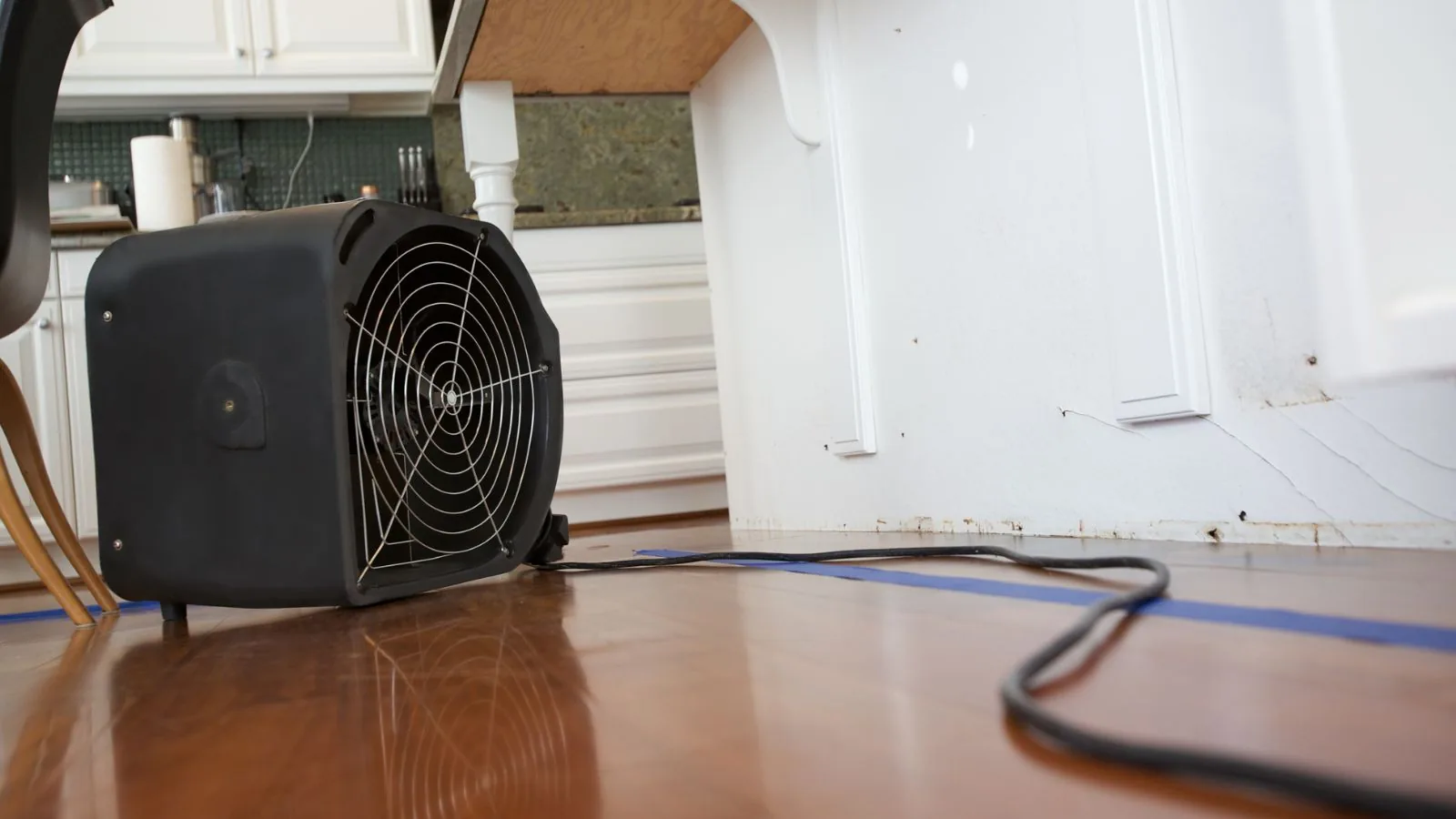
Restoration cost depends on how much water there is, how long it sat, what it touched and how many rooms are involved. We do not publish prices because every loss is different, but we always explain the scope and price before work starts. This guide shows what moves the number so you can judge any quote.
The five biggest cost drivers
Water category
Clean water is the least costly. Gray and black water add cleaning and removal.
Damage class
Class 1 is small and contained. Class 4 involves deeply saturated materials.
Area affected
More square footage means more equipment and time.
Materials
Hardwood and plaster are harder to dry than carpet and drywall.
Time elapsed
Water that sat for days costs more than water caught in hours.
How companies price the work
Some charge by the day for equipment, some by the square foot for extraction and some by the item for demolition and repairs. A good quote lists labor, equipment and materials separately so you can compare.
| Pricing part | What it covers | What to ask |
|---|---|---|
| Extraction | Removing standing water | Per hour or per square foot? |
| Equipment | Air movers and dehumidifiers | Per day, and how many days? |
| Demolition | Removing wet materials | What will be removed? |
| Cleaning | Treating surfaces | Which areas? |
| Repairs | Drywall, flooring, paint | Included or separate? |
Questions before you agree
- What is included in the scope and what is not?
- How many pieces of equipment and for how many days?
- How will you document drying for my insurer?
- Who does the repairs after drying?
- What happens if the scope changes?
Why the cheapest quote may not be cheapest
A low quote that skips drying or demolition can lead to mold and a second bill. A clear scope with measured drying is usually a better value than a vague number. Beware of large deposits and quotes you cannot read.
Insurance and out-of-pocket costs
Your insurer may pay for sudden losses after your deductible. Keep receipts and the company's invoices, and ask your adjuster what is covered before authorizing work. Emergency mitigation is usually expected and is often covered.
How the size of a loss changes the scope
A small contained leak that is caught within hours may need only extraction and a few days of drying. A leak that ran overnight can wet several rooms and need demolition of drywall and flooring. A flood or sewage backup adds cleaning and disposal that smaller leaks do not need.
Each step has a cost, and a good quote shows them separately. If a quote shows one big number and nothing else, ask for the breakdown.
Ways to keep the cost down
- Shut off the water and call right away.
- Move belongings out of the wet area before the crew arrives.
- Photograph the damage before cleanup.
- Keep the crew's drying logs and send them to your insurer.
- Ask what can be dried in place instead of replaced.
The best way to save money is to act fast. Water that is removed within a day or two causes far less damage than water that sits for a week.
Red flags in an estimate
- No written scope or no list of equipment.
- A price that arrives with no inspection.
- Pressure to sign before you have read the paperwork.
- No mention of drying readings or documentation.
- A request for the full payment in advance.
A clear estimate describes what will be done, where, with what equipment and for how long. If you do not see that, ask. If you still do not get an answer, call another company.
Mitigation versus repair
Mitigation means stopping the damage by removing water and drying. Repair means rebuilding what was removed, such as drywall, flooring and paint. Insurers often treat them as separate parts of a claim, and some companies do only one of them.
Ask who will do the repair work and how the price is set. You may prefer a different contractor for the rebuild, and that is a normal choice as long as the drying is done properly first.
Why we explain the scope first
A price is only meaningful if you know what it covers. We explain what we plan to remove, how many days of drying we expect and what the repairs would involve, and then explain the price. That way you can compare it with another quote or share it with your insurer.
If the scope changes because we find more damage, we tell you before continuing. No homeowner should be surprised by a bill they did not understand.
How to compare two written scopes
Put the two scopes side by side and look at the line items. One may include removal of wet baseboards while the other leaves them in place. One may list the number of air movers and the days of use, and the other may not. A lower total can hide a smaller scope.
Ask each company how it will confirm that the structure is dry. A scope with moisture logs and a final reading is worth more than one that ends when the equipment is picked up.
Why the price can change after work begins
Opening a wall may show more wet insulation than the first meter reading suggested. When that happens, a good company stops, shows you what it found and explains the change before it goes further.
Local factors on Johns Island
The Census Reporter's American Community Survey data for the Johns Island county division lists a median owner-occupied home value of $518,500, with about 10,565 housing units. Higher-value homes often have finishes such as hardwood, custom cabinets and stone that cost more to dry carefully and repair.
See our pages on hardwood floor repair and kitchen water damage restoration for the finishes that add cost, and ask about our work in North Charleston and Charleston.
Questions we hear on Johns Island
Every loss is different. We explain the scope and price before work starts, after we see the damage.
Often yes for sudden losses, after the deductible.
Ask during the call. Payment terms are discussed before work starts.
Scope, equipment and materials vary. Compare line by line.
Sometimes, but ask what it covers and get it in writing.