
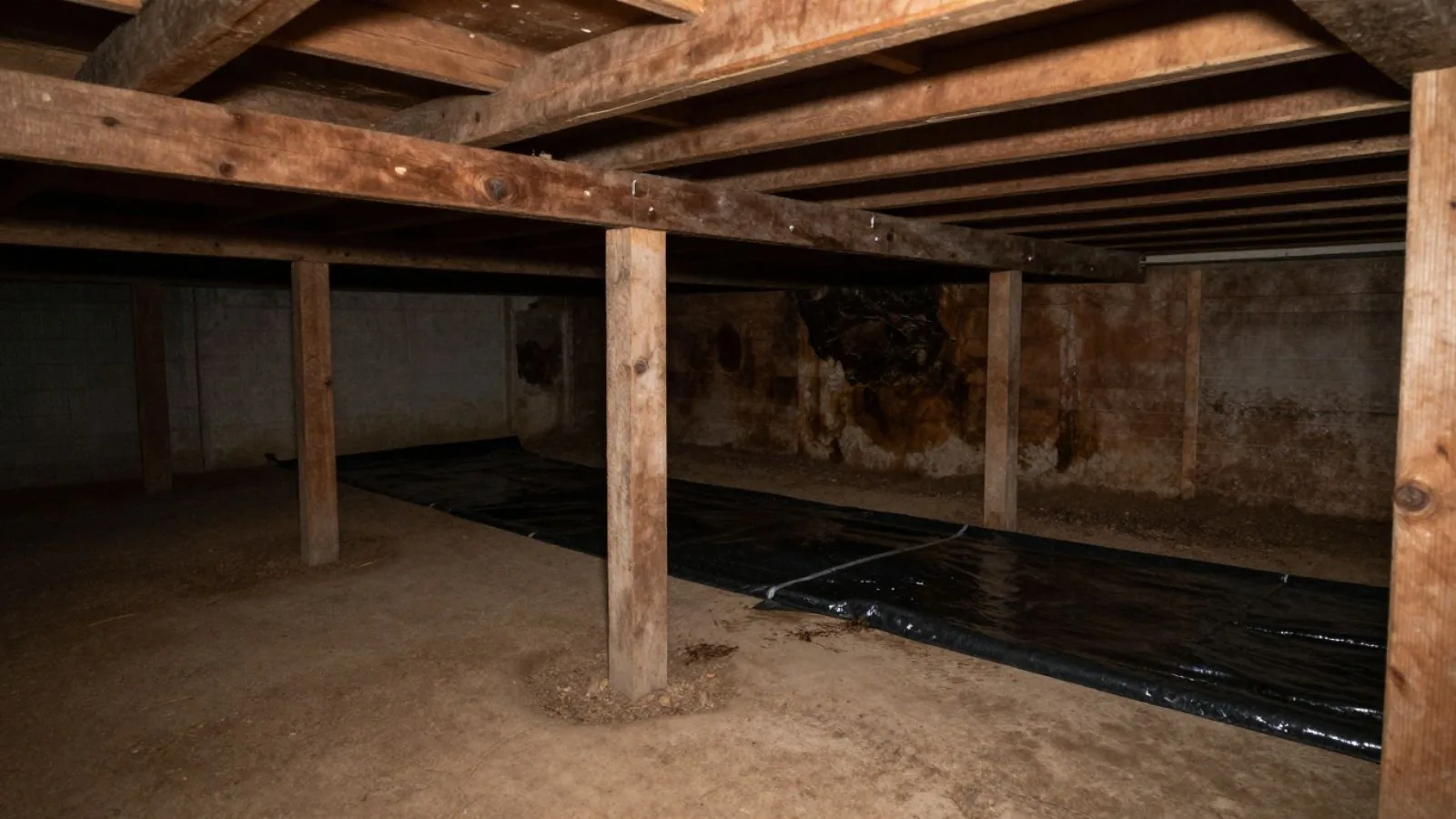
Mold can begin to grow within 24 to 48 hours on damp materials, and visible growth often appears within a few days to a week if the area stays wet. Warm, humid conditions speed everything up. The good news is that fast drying stops most mold before it starts.
A realistic timeline
| Time since water | What is happening | What to do |
|---|---|---|
| 0 to 24 hours | Materials absorb water, spores are dormant | Extract, begin drying |
| 24 to 48 hours | Mold may begin on damp surfaces | Dry thoroughly, remove soaked materials |
| 3 to 7 days | Visible growth possible | Call for assessment |
| Over a week | Growth established, odor | Remediation likely needed |
What mold needs
Mold needs spores, food, moisture and a suitable temperature. Spores are in the air everywhere. Drywall paper, wood, insulation and dust provide food, and the Lowcountry's warm months provide temperatures mold likes. That leaves moisture as the one factor you can control.
What speeds growth up
Warm temperatures
Growth is fastest in warm conditions.
High humidity
Damp air keeps materials from drying.
Poor airflow
Closed rooms and wall cavities hold moisture.
Porous materials
Drywall, carpet pad and insulation hold water.
Delayed response
Each day adds risk.
Signs mold has started
A musty smell, new dark spots, discolored caulk, peeling paint and warped drywall are early signs. Allergy-like symptoms that improve when you leave the house can also be a clue, but they are not proof.
How to prevent mold after a leak
Stop the source
Close the valve or fix the roof.
Remove water
Extract standing water quickly.
Dry thoroughly
Use dehumidifiers and air movers.
Check readings
Confirm that materials are dry.
When mold has already started
If you find growth, avoid disturbing it and call for help. Our mold remediation page explains containment, removal and cleaning. For moisture still in the structure, see structural drying.
What happens if you wait
Waiting a week to start drying lets mold establish in drywall paper, carpet pad and wood. Once mold is established, drying alone does not remove it, and materials may need to be cut out. That turns a drying job into a remediation job, which costs more and takes longer.
The cost of waiting grows each day. Calling on the day of the leak is the best insurance against mold.
What a professional looks at first
- Moisture readings in every room that was wet.
- Thermal images of walls and ceilings.
- The condition of carpet pad, baseboards and cabinet bases.
- Odor and any visible growth.
- The source and whether it is fully stopped.
If readings are high or growth is visible, we explain the scope and price before work starts. Your insurer may need the report too.
Where mold starts first after a leak
Carpet pad and carpet edges
Pad holds water for days and feeds growth.
Bottom of drywall
Paper facing wicks water and supports mold.
Cabinet bases and toe kicks
Closed spaces stay damp in humid weather.
Insulation
Wet batts stay wet against framing.
Behind baseboards
Trapped moisture grows mold unseen.
These are the places a crew checks first, because they hide moisture and stay wet longest. If you smell mustiness near any of them, ask for readings.
How to check for early mold yourself
Look at the lower part of walls, the back of cabinets and the underside of furniture that sat against a wet wall. Use a flashlight at an angle to show texture, and sniff for a damp smell. Pull back a corner of carpet if it is safe to do so and look at the pad and tack strip.
Early mold may look like a faint shadow or powdery spotting. If you see anything suspicious, stop disturbing it and call for help, and take photos for your records.
Why Lowcountry homes are a special case
Warm temperatures and high humidity are the two things mold needs most after moisture. Coastal South Carolina has both for much of the year, so a wet material that stays damp is at higher risk here than in a dry climate.
Hidden spaces matter most. Wall cavities, the space under cabinets and the area behind baseboards stay damp longest because air does not move there. A moisture meter can find these spots, and thermal imaging can show cool wet areas that look normal to the eye.
What slows growth while you wait for help
Remove standing water, open windows if the outdoor air is drier than the indoor air, and run fans across wet surfaces. Pull wet rugs and cushions out of the room. These steps do not replace professional drying, but they buy time.
Testing and when it helps
Air or surface testing can show whether spore levels are higher indoors than outdoors. It does not tell you why mold is there, and it does not replace finding the moisture. Many homeowners skip testing and focus on drying and removal.
Testing is most useful for clearance after a cleanup, for a home sale, or when someone has symptoms and visible growth is not obvious. Ask who will take the sample, which lab will read it and how the result will be explained.
Johns Island timing
Hurricane season runs June 1 through November 30, which overlaps with the warmest, most humid months. A leak in July is more likely to grow mold quickly than a leak in January, though winter freezes and thaws also create moisture problems.
If a roof or ceiling leak is the cause, see ceiling water damage repair, and we serve North Charleston and Charleston as well.
Questions we hear on Johns Island
It can start, though visible growth usually takes longer.
Fast, complete drying prevents most mold growth.
Yes. A musty odor often shows up first.
Moisture readings and thermal imaging can show wet areas. Opening the wall confirms.
Cooler months slow growth but do not remove risk, especially with indoor humidity.