
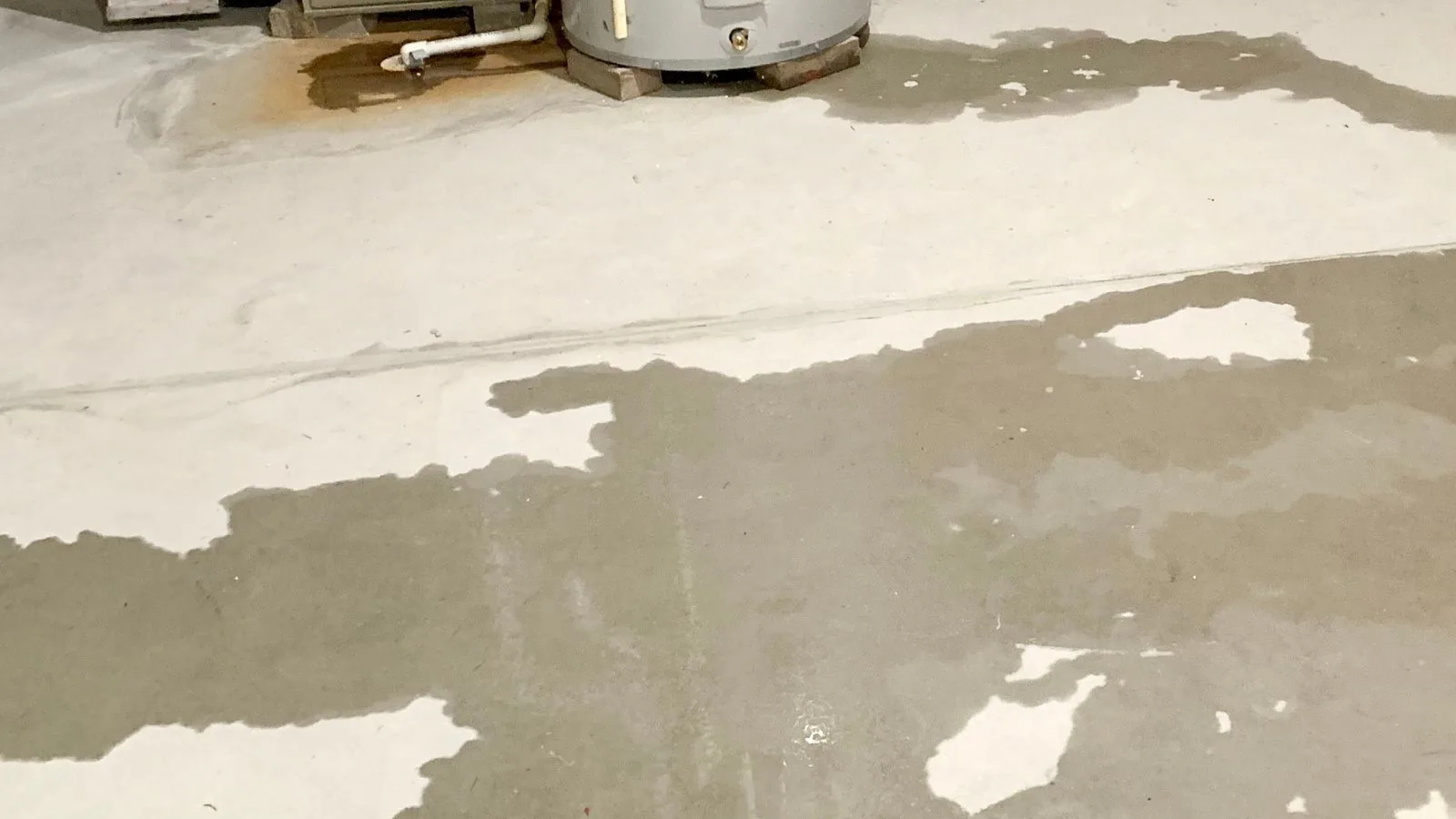
Look for stains, soft spots, musty smells and mismatched paint, ask for the disclosure and insurance claim history, and use a moisture meter or a professional inspection before you commit. Water damage is easy to hide for a showing and expensive to find later. This guide gives you a walkthrough you can use in an hour.
Start outside the house
Walk the perimeter and look at the grade. Soil should slope away from the foundation, and downspouts should discharge several feet from the walls. Look for staining on siding, rust at the base of posts and cracks in stucco or brick.
Check the roof from the ground. Missing shingles, sagging lines and stained soffits point to leaks above. Note the age of the roof if you can, because an older roof is a likely future leak.
Inside: use your eyes, nose and hands
Stains on ceilings and walls
Brown rings, bubbling paint and fresh paint patches deserve questions.
A musty smell
Persistent odor often means hidden moisture.
Soft or warped floors
Press along baseboards and under windows. Cupped boards point to moisture.
Closed-up rooms
A room that is cold, damp or locked may have a reason.
Cabinet floors
Open every cabinet under sinks and look for stains and swelling.
Water heater and AC
Look for rust, stains and a drain pan that has water in it.
Questions for the seller
Ask whether there has been any flooding, roof leak, plumbing failure or insurance claim. Ask for repair records and permits. Sellers are often required to disclose known water problems, though the rules vary, so ask your agent what applies.
You can also ask for a claims history report, known as a CLUE report, which insurers use. It shows prior water claims on the property.
Tools and professionals
A moisture meter can find damp drywall and wood without cutting anything open, and a thermal camera shows temperature patterns that suggest wet areas. A home inspector will check these, and a specialist can go deeper on anything suspicious.
| Concern | What to bring in | Why |
|---|---|---|
| Stains on ceiling | Inspector and roofer | Find the source |
| Musty smell | Moisture check, mold assessor | Locate hidden moisture |
| Crawl space dampness | Inspector | Check vapor and framing |
| Past flood | Flood certificate review | Understand risk |
Check flood risk, not just past damage
Use FEMA's Flood Map Service Center to see the flood zone for the address, and ask the seller for any elevation certificate. Flood insurance can be a significant monthly cost, so get a quote before you close.
Negotiating if you find damage
If you find active moisture, ask for repairs, a credit or a lower price, and make sure the work is done by qualified professionals with records. In some cases the safest choice is to walk away.
A printable walkthrough list
- Look at every ceiling corner and the area under every bathroom.
- Open every cabinet under every sink and check for stains and swelling.
- Run each faucet and flush each toilet and check for drips below.
- Look at the water heater base and the AC drain pan.
- Check windows and doors for stained sills and soft trim.
- Smell the closets, the garage and the crawl space entrance.
- Ask about past claims and repairs, and ask to see permits.
Bring a flashlight, a phone with a camera and a moisture meter if you have one. Take photos of anything questionable and send them to your inspector before the inspection date.
Timing your due diligence
Most purchase contracts include an inspection period. Use it for a general inspection and for any specialist visit that the general inspector recommends. If something is found late in the period, ask for an extension in writing rather than skipping the check.
Special checks for coastal homes
Homes near tidal water can have raised foundations, crawl spaces and flood vents. Look at the crawl space for standing water or dark staining, and check that vents are intact. Ask whether the home has flooded in past storms.
Also look at the AC system, which works hard in coastal humidity. A rusted air handler, a clogged drain line or wet insulation near ducts points to ongoing moisture.
When to walk away
Walk away or renegotiate if the inspection finds active leaks you cannot trace, widespread mold, a history of repeated flooding or a seller who refuses to share records. Repairs on a home with unknown water problems can far exceed the savings in the price.
If you still want the home, ask for a price reduction, a repair credit or an escrow holdback tied to documented repairs. Get everything in writing.
Questions to ask the seller and the agent
Ask whether the home has ever had a leak, a flood or an insurance claim for water. Ask when the roof, the water heater and the supply lines were last replaced. Written answers are better than verbal ones, and a seller disclosure form can help.
Also ask about the HVAC condensate line and any crawl space vapor barrier. Small items like these often explain a stain or a smell that an inspector notes but cannot fully explain.
Buying on Johns Island
About one third of Johns Island lies inside the City of Charleston limits, and the rest is mostly unincorporated Charleston County, so permit records come from different offices. Ask which office holds the permit history for the address. Charleston County Building Inspection Services handles unincorporated areas.
If an inspection finds an active leak, our pages on ceiling water damage repair and crawl space water damage explain the usual fixes, and we serve North Charleston and Ravenel buyers as well.
Questions we hear on Johns Island
Not always. Inspectors see what is visible and accessible. Specialists can look deeper.
Fresh paint on a ceiling or wall with no explanation, especially with a musty smell.
Not necessarily. A leak that was fixed and dried properly may be fine. Ask for records.
Not by default. If you see growth or smell mold, a test may help. See the mold remediation page for next steps.
Use FEMA's Flood Map Service Center and ask your lender.